Sugar Glider Diet: Why the Experts Disagree, and What Your Glider Actually Eats
If you’ve searched for a sugar glider diet and come away more confused than when you started, that’s not a failure on your part. The sources most new keepers find simply don’t agree. A popular breeder recipe builds the bowl around fruit, vegetables, applesauce, and yogurt. A university veterinary hospital builds it around a honey-based nectar mix. The Merck Veterinary Manual puts artificial nectar at about half and keeps produce to a small share. A fourth, the VCA hospitals handout, splits everything into thirds.
We won’t pretend one is obviously right. This guide lays the plans side by side, explains why they disagree, and walks through the one peer-reviewed feeding study that changes how you should read all of them. Then it gets practical: what every sugar glider diet plan agrees on, where calcium goes wrong, which foods are safe, risky, or never, and how to settle on a routine with an exotics vet.
What wild sugar gliders eat, and why a sugar glider diet is so hard to copy
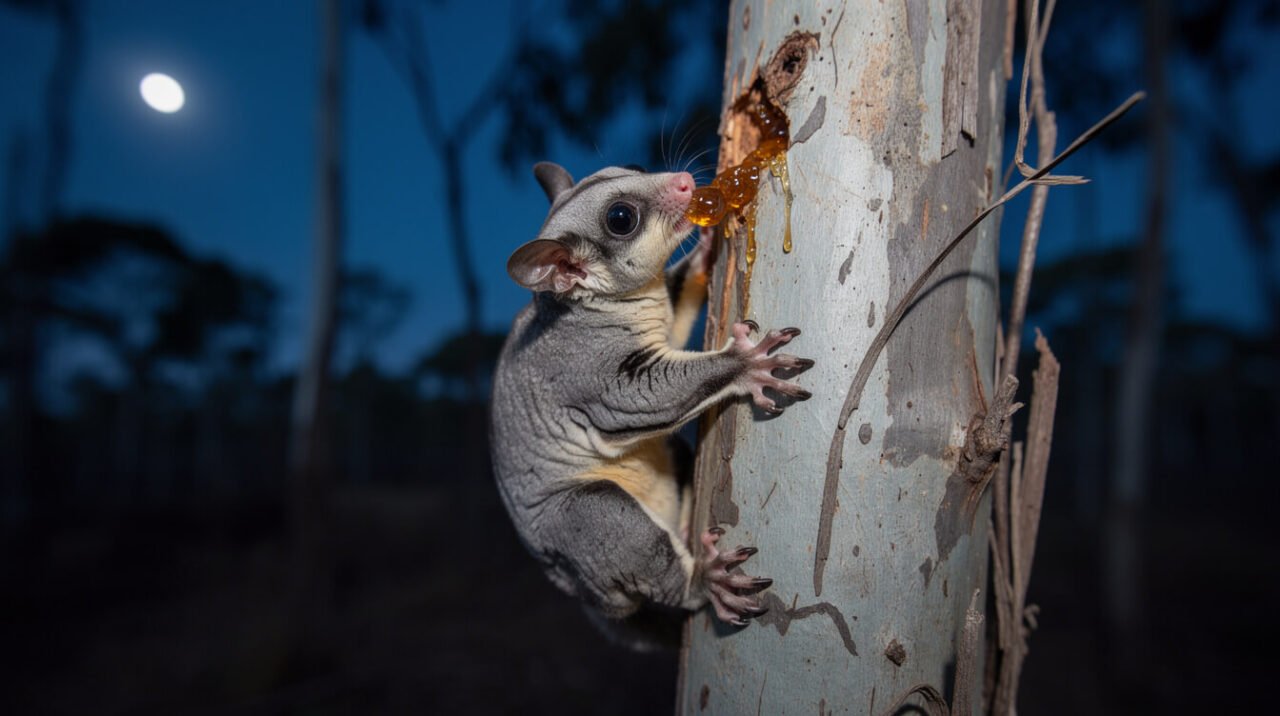
Sugar gliders (Petaurus breviceps) are small marsupials from Australia and New Guinea. According to the Merck Veterinary Manual, adult males typically weigh 110–170 grams (about 4–6 ounces) and females 85–140 grams (3–5 ounces). That’s roughly the weight of a deck of cards, eating in the dark, with a metabolism tuned to a menu no pet store stocks.
In the wild, VCA’s veterinary authors describe opportunistic omnivores that eat eucalyptus and acacia sap and gum, nectar and pollen, manna (sugary deposits where sap oozes from tree wounds), honeydew (sugar secreted by sap-sucking insects), and a wide variety of insects and spiders, shifting with the seasons. A 2017 feeding study we’ll come back to describes the species as “highly gummivorous,” meaning tree gum is a core food, not a side dish. Gum is mostly complex carbohydrate and fiber. It’s not the same thing as sugar, even though the animal’s common name makes it sound that way.
Why nobody has “solved” captive feeding
The honest starting point is that the experts say the problem is unsolved. Purdue’s veterinary hospital puts it bluntly: “ideal captive diets have not been developed.” It also lists the diets three zoos have used and adds that the fact zoos have used them “does not guarantee that they are balanced.” NC State’s veterinary hospital says the wild diet “is very difficult to replicate in captivity, and this has led to a lot of controversy about what is appropriate to feed sugar gliders.”
Every captive sugar glider diet is a grocery-store approximation of gum, sap, nectar, and bugs, and the approximations differ because their authors weighed the trade-offs differently. It’s part of why gliders are more demanding than their size suggests, as we cover in why sugar gliders are such controversial pets.
The four sugar glider diet plans you’ll see recommended, side by side
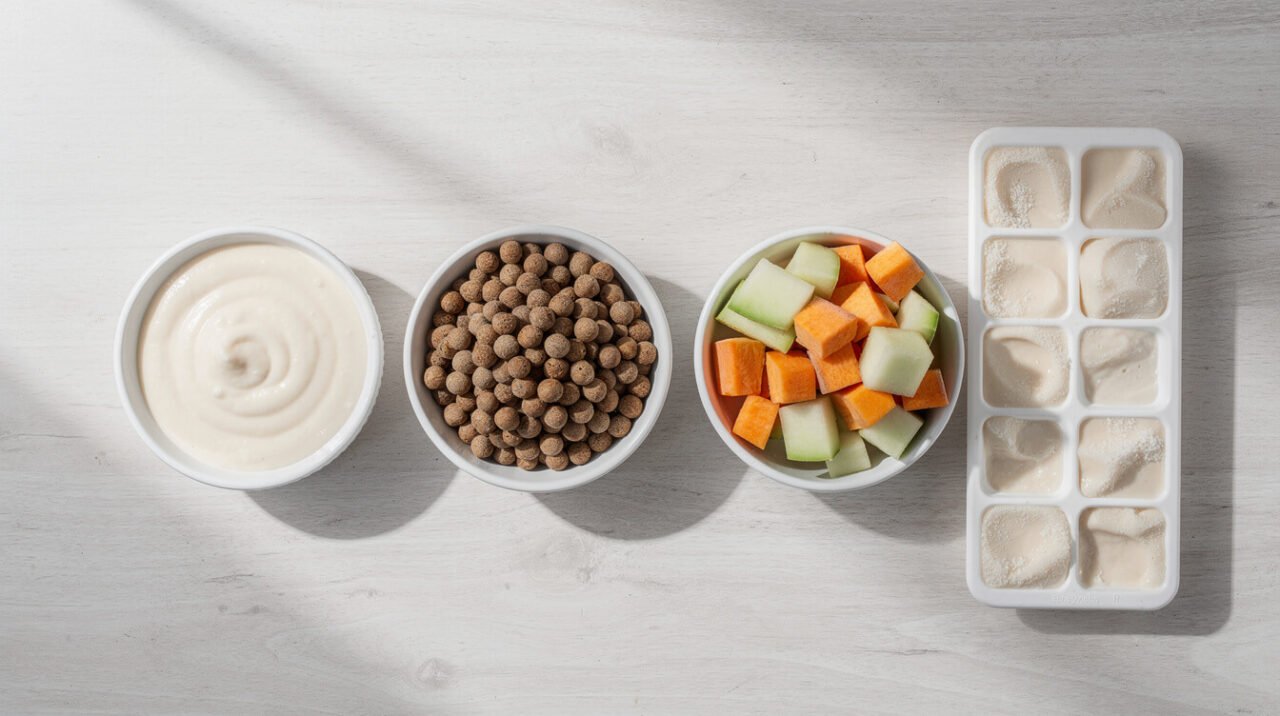
Here are the four plans most keepers run into, each in its source’s own words and numbers, unblended.
| Source | Base of the diet | Pellets | Produce | Protein | Supplement |
|---|---|---|---|---|---|
| The Pet Glider (TPG), a breeder and supply retailer | A blended mix of fruit, vegetables, applesauce, plain yogurt, orange juice concentrate, and oatmeal. 1½ tablespoons per glider per day, served late afternoon | Its own cereal (“brunch”) kept out as a free-feed snack | The bulk of the base recipe (2 cups fruit, 2 cups vegetables per batch) | Cooked chicken, turkey, or egg in the mix; up to 3–4 live giant mealworms a day | Its own multivitamin with calcium, 1/8 teaspoon daily, described as a “must” |
| NC State veterinary hospital | ~60% Leadbeater’s mixture (a nectar-style blend of honey, egg, juice, baby cereal, and supplements). ¼–½ frozen cube per glider per day | ~30%: about 1 teaspoon of a commercial omnivore pellet | ~10% vegetables, fruits, and tree nuts: 2–3 teaspoons per glider per day | Egg and chicken baby food in the mix; mealworms as occasional treats | Reptile-brand multivitamin and phosphorus-free calcium with D3, blended into the mix |
| Merck Veterinary Manual (reviewed Nov 2025) | “About half” artificial nectar (such as Leadbeater’s) | Part of the remaining half | “Small amounts.” Merck’s wording caps them at “no more than 10% of the overall diet”* | Live insects, gut-loaded or calcium-dusted; cooked chicken or turkey, boiled egg | Vitamin and mineral supplements, including calcium with vitamin D3 |
| VCA Animal Hospitals | One-third nectar or sap-based mixture | One-third, kibble freely available | Shares the final third with insects and supplement; fruit “only a small portion” | A small number of insects, every other day | A calcium-based multivitamin |
*Merck’s sentence reads: “The rest of the diet should be a mix of commercial pellets, live insects, and fresh fruits and vegetables in small amounts (together, no more than 10% of the overall diet).” The most natural reading is that fruit and vegetables together stay at or under a tenth of the diet. A stricter reading, that pellets, insects, and produce combined are capped at 10%, doesn’t add up next to “about half” nectar. We’ve reported the wording rather than guess further. If the exact split matters for your plan, ask your vet.
Two things the table hides
Who wrote it. Three of the four are veterinary sources. TPG is a breeder that also sells the vitamin its plan calls mandatory. That doesn’t make the recipe wrong, and many keepers have fed it for years, but it’s the only plan here with a product attached, which is worth knowing when you weigh its claims.
How much the “same” plan varies. Dr. Laurie Hess, a board-certified veterinarian (DABVP) who specializes in birds and exotic pets, is credited on both the Merck page (about half nectar) and the VCA handout (a third nectar, a third pellets). That isn’t a gotcha. Experts update their thinking, and it shows how unsettled the question is even among the people who know it best.
One note if you read NC State’s full handout: its greens section gives portions per two pounds of body weight, which reads like general small-mammal guidance for an animal that weighs a fraction of a pound. We’ve used the glider-specific portions from its diet section.
Why the diets disagree: what the 2017 feeding study found
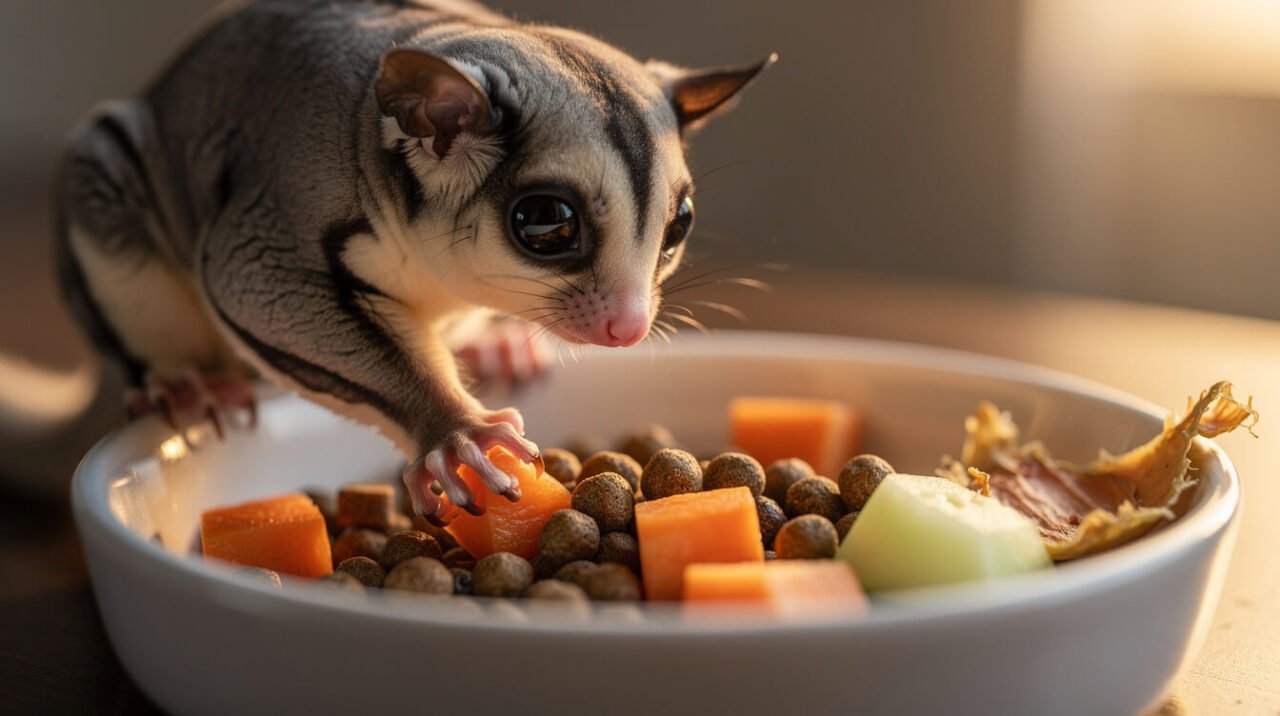
Almost no page you’ll find on sugar glider feeding cites a study. One exists, and it’s worth knowing about.
In Dierenfeld and Whitehouse-Tedd (2018, published online 2017), researchers fed three popular pet diets to 12 pairs of sugar gliders. Two were liquid formula mixes with added fruit and vegetables, and the third was extruded pellets plus a liquid formula. They then measured what the animals actually ate and digested. The abstract doesn’t name the diets by brand, and we won’t guess which was which.
What they found:
- What the gliders ate varied enormously in sugar. Measured as eaten, the diets ran from 8% to 49% sugar on a dry-matter basis. That’s a sixfold spread between plans that are all called “a sugar glider diet.”
- The gliders sorted their food. In the authors’ words, the animals “displayed selective feeding behaviours, rejecting insoluble fibre in produce and preferring the lipid-coated exterior of pellets.” In plain terms, they left the fibrous parts of the fruit and vegetables and licked or nibbled the fatty coating off the pellets.
- “Balanced” on paper wasn’t the whole story. All three diets appeared balanced for energy, protein, and the major minerals. Even so, the authors concluded they “may predispose to iron excess, other mineral imbalances (especially Ca deficiency) and obesity,” which are the same problems vets see in pet gliders.
- Gliders can handle fiber. They digested 58–75% of the insoluble fiber they ate, which fits a gum-eating species.
What that means for the diet wars
This is the piece that makes the disagreement make sense. Every plan in the table is a reasonable attempt to balance a recipe. None of them can control what a sweet-toothed, highly selective eater actually swallows. A plan built on fruit and yogurt, a plan built on honey nectar, and a plan built on pellets can each look fine on paper. They can each fail in practice, too, for the same reason: the glider eats the best-tasting parts.
The authors called for more research into fiber, vitamin D metabolism, and trace minerals in this species. In other words, the science isn’t finished, and any source calling its sugar glider diet the settled answer is claiming more than the evidence supports.
What your glider actually eats vs. what you serve

If sorting is the problem, the next morning’s bowl is your best data, whichever sugar glider diet you follow.
The morning leftover check
Before you clear the dish, take ten seconds to notice:
- Is the sweet fruit gone but the vegetables untouched? Your glider is eating the sugary part of the diet and skipping the rest.
- Are there pellets that look licked or hollowed but not eaten? That matches the coating-only behavior the 2017 study described.
- Is the calcium-dusted food the part that’s left? Then the supplement isn’t reaching your glider, however carefully you measured it.
A pattern over several nights tells you more than any single bowl. If the same thing is always left, tell your vet. The fix might be finer pieces mixed so they can’t be picked apart, a different way to deliver the supplement, or a different base.
Weigh the glider, not just the food
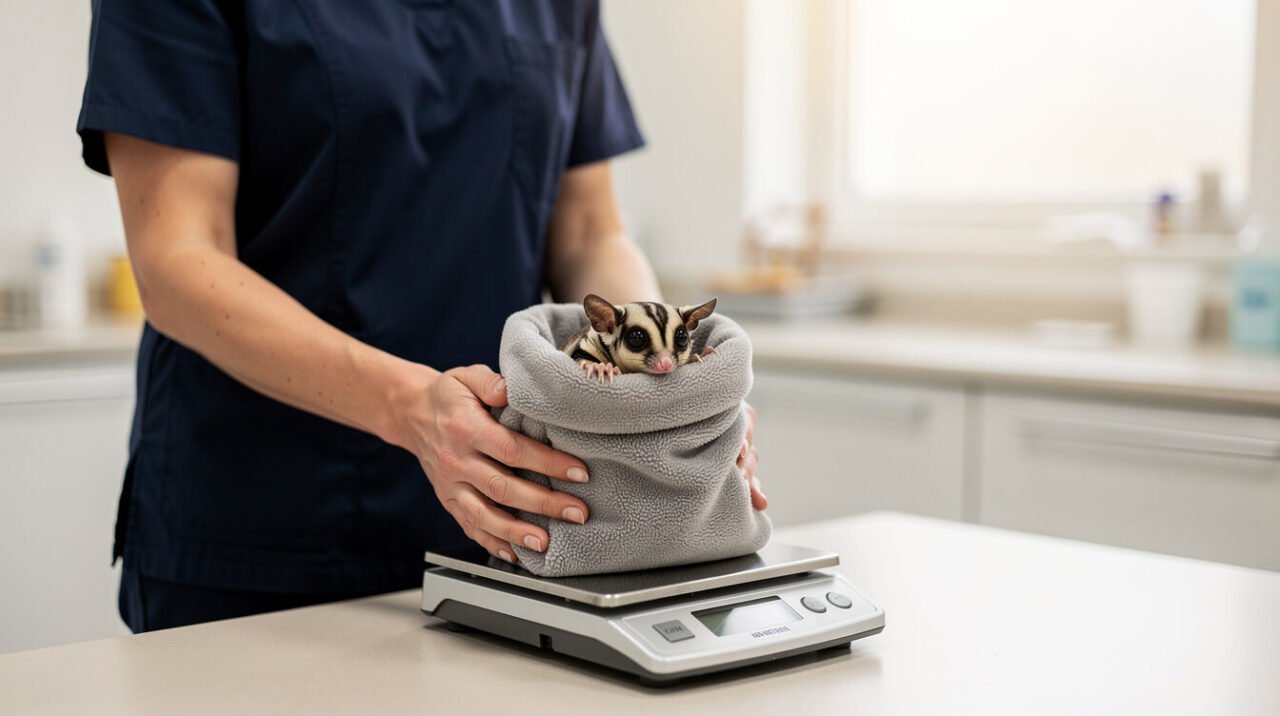
Purdue notes that sugar gliders are “prone to obesity and their weight and dietary intake should be monitored closely.” A digital kitchen scale that reads in grams costs little and is the most useful diet tool you can own. Many keepers weigh weekly at the same time of day, with the glider in a pouch on the scale (subtract the pouch). Write it down. A slow climb or a slow slide is easy to miss by eye in an animal this small, and obvious on a chart.
VCA gives one rough check on quantity: pet gliders should eat roughly 15–20% of their body weight a day. For a 120-gram glider, that’s about 18–24 grams of food. Treat it as a sanity check, not a target. Your vet can tell you what a healthy weight looks like for your glider.
Stress matters too. Gliders are colony animals, and a stressed or lonely glider may eat poorly. Our guide to why sugar gliders bite covers how stress shows up.
The weekly care guide
Get it right for your animal, every week
One email a week: new care guides, species deep-dives, and the safety answers keepers search for, written by our specialists. No spam. Unsubscribe anytime.
Calcium: the nutrient most likely to go wrong in a sugar glider diet
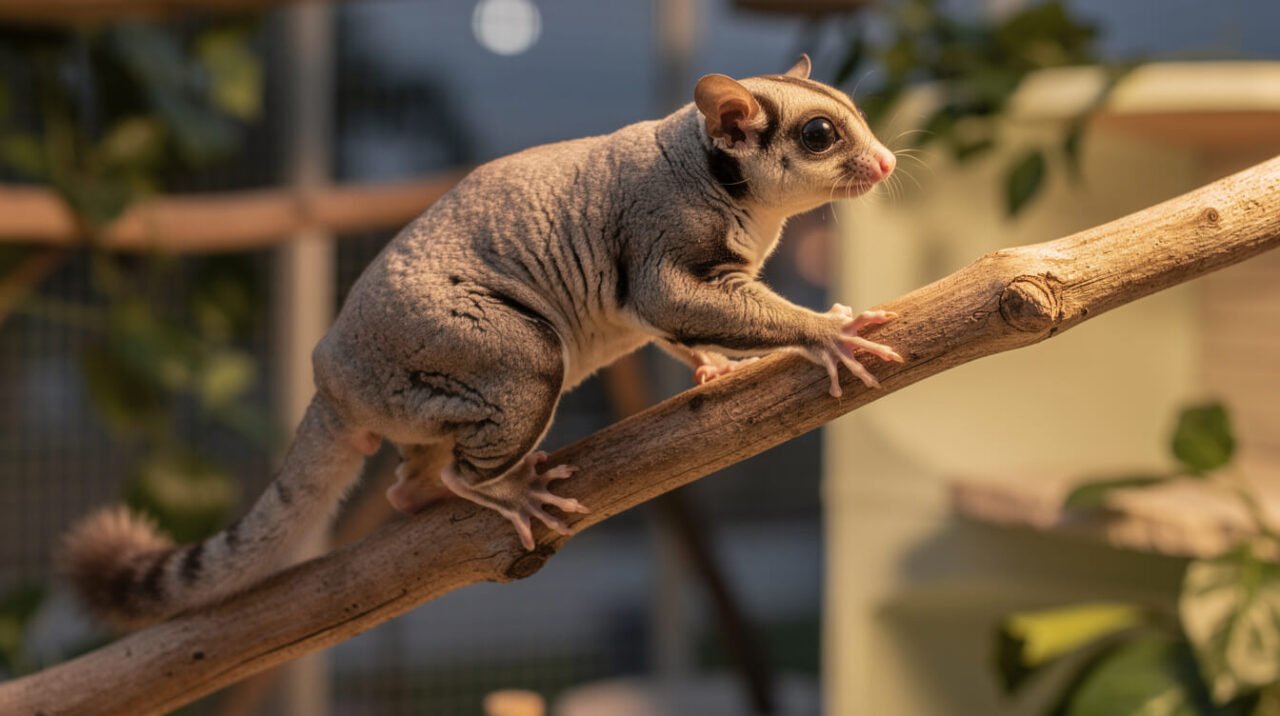
If the four plans disagree on almost everything else, they agree here. Every one of them adds calcium, and every veterinary source names calcium problems as a leading diet-related illness. VCA’s handout states that “most non-traumatic problems in sugar gliders seen by veterinarians are related to nutrition.”
How it goes wrong
Many fruits and vegetables carry more phosphorus than calcium. Calcium also needs vitamin D3 to be absorbed. A diet heavy in fruit and light on a balanced calcium source pushes the body to keep blood calcium steady the only way it can: by pulling calcium out of the bones. The Tree of Life Exotic Pet Medical Center describes the result: bones that become “weak and soft, leading to pain, deformities, and fractures.” Vets call this nutritional secondary hyperparathyroidism, or metabolic bone disease (MBD).
Merck’s disorders page separates low blood calcium (hypocalcemia) from the bone softening itself (nutritional osteodystrophy). NC State is direct about where fruit-and-syrup diets lead: “weak bones, tremors, seizures, and death.” And remember the sorting study: calcium in the bowl doesn’t help if it’s on the part your glider leaves.
Signs to know
According to Merck, an early sign of softening bones is weakness in the back legs, which can progress to paralysis. Other signs from veterinary sources include:
- Trembling, twitching, or tremors that aren’t just a brief startle
- Reluctance to climb or glide, or trouble gripping a perch
- Pain or crying out when handled
- Fractures, sometimes with no known injury
- Loss of appetite, weight loss, or lethargy
- Seizures
This is a vet-today situation. NC State lists low calcium as an emergency and says a glider that stops eating should be seen right away, especially with weakness, tremors, or seizures. Low blood sugar can look the same, and a tiny animal runs out of reserves fast. Call an exotics vet now. Don’t try to dose calcium syrup or supplements at home without your vet’s instructions, because the right treatment depends on what’s actually wrong.
The hopeful part: Merck says that if it’s treated early, sugar gliders can recover from metabolic bone disease. Treatment involves cage rest, calcium and vitamin D3, and correcting the diet under a vet’s care. Catching the early signs is what makes that possible. It’s one more reason the weigh-in habit is worth keeping.
Safe foods, risky foods, and never foods
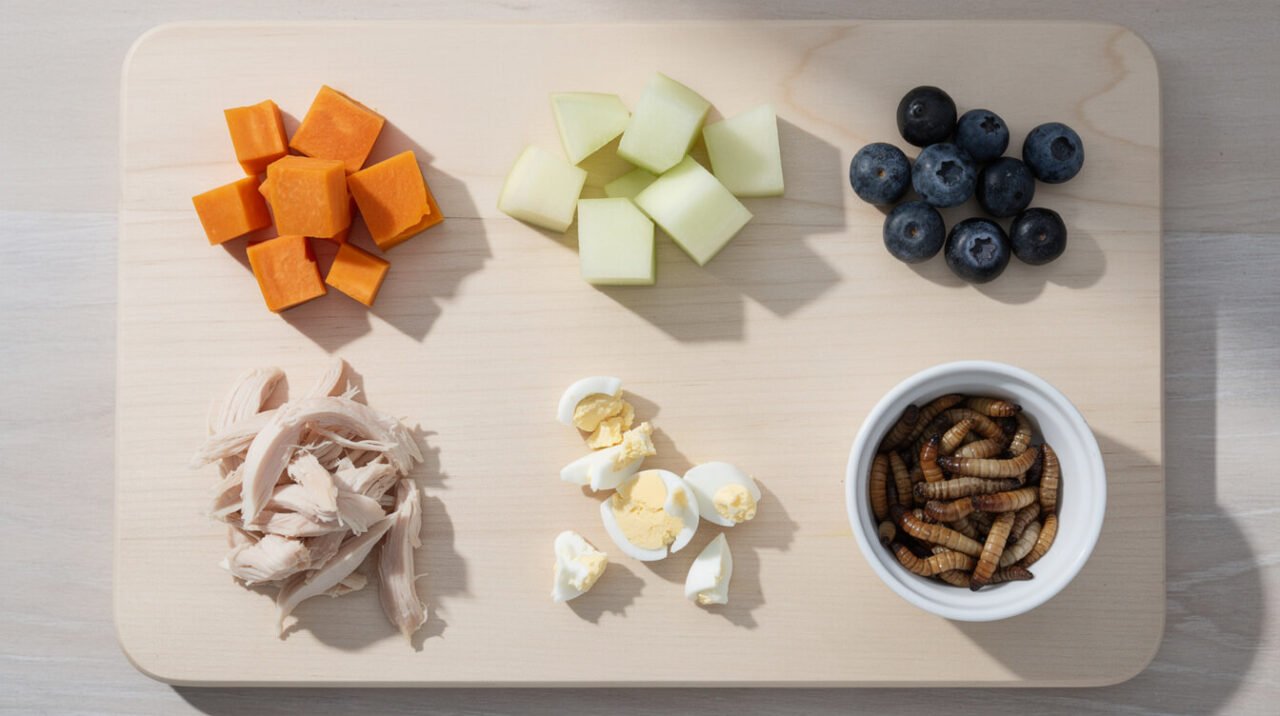
These lists come from the veterinary sources. Where sources disagree about a specific food, we’ve put it in its own section instead of choosing a side.
Generally listed as acceptable
Merck’s acceptable list covers commercial glider diets (pellets, powders, or gels), artificial nectar such as Leadbeater’s, fruits (apples, bananas, berries, melons, papaya, pears), vegetables (carrots, corn, sweet potatoes), live insects (mealworms, crickets), cooked turkey or chicken, boiled eggs, pure fruit juice with no added sugar, and nuts as occasional treats. Wash raw produce well and chop it fine. Merck adds that hard-shelled insects help reduce dental tartar, a bonus for a species prone to dental disease on soft, sugary food.
Never foods
The veterinary sources agree on these:
- Chocolate (Merck: poisonous to sugar gliders)
- Coffee, tea, and soda
- Candy and canned fruit (high in sugar, sodium, and preservatives)
- Fruit pits and seeds
- Raw meat or raw eggs
- Insects caught outdoors, or crickets raised on a poor diet
- Produce treated with pesticides
The TPG plan adds garlic, leeks, and onions of any kind, plus rhubarb. That’s a sensible caution to follow even though it isn’t on the vet pages above.
Where the sources genuinely disagree
- Yogurt and dairy. Yogurt is in TPG’s base recipe, and TPG lists yogurt drops as a treat. VCA says never to feed dairy products and names “yogurt treats” as “a common cause for dental disease and obesity.” If you use a dairy-based recipe, this is worth raising with your vet. Sugary yogurt treats are the clearest place to cut back.
- Cat food. TPG says never. Merck says small amounts of dry cat food can be used temporarily for protein when insects aren’t available, but not long term. Both agree it isn’t a staple.
- Carrots, collards, and pears. Merck lists carrots and pears as acceptable, and TPG lists collards as a favorite. NC State’s own greens table rates collards as low in oxalate. VCA, though, puts carrots, collards, and pears on a list of high-oxalate foods to avoid, along with spinach, beets, lettuce, figs, strawberries, raspberries, and blackberries, because oxalates reduce calcium absorption. In practice, rotating these foods and keeping them small fits all the sources better than making any of them a daily staple.
- Nuts. NC State includes tree nuts in the small daily produce portion. Merck says nuts are high in fat and should be occasional treats only. TPG says to avoid most nuts and seeds because of their phosphorus. All three say they’re a small amount at most.
- Reptile supplements. NC State’s Leadbeater’s recipe uses reptile-brand calcium and multivitamin powders. TPG says in capitals never to use reptile vitamins for a small mammal. (TPG also sells a glider-specific alternative.) We can’t settle this from the published sources. Choose your supplement with your vet, and don’t stack two products.
- Honey and sugar. NC State’s recipe includes half a cup of honey per batch, while TPG says to avoid foods with added sugar. Wild gliders do eat nectar, honeydew, and manna. The 2017 study’s 8–49% sugar range is a reminder that “how sweet is the total diet” is a fair question to ask your vet about any recipe, including a vet-written one.
As for drinks, everyone agrees on fresh, clean water at all times, changed daily, in a bottle or dish your glider actually uses. VCA prefers filtered water.
If you share your home with other exotics, our complete hedgehog care guide covers a fellow insect-eater whose diet questions overlap in places.
Building a sugar glider diet routine with your exotics vet
Here’s the encouraging part. Underneath the disagreements, there’s a lot of common ground, and you can build on it with confidence.
What every plan agrees on
- Produce is a small share, not the base. Both NC State and Merck keep fruit and vegetables to roughly a tenth, and VCA keeps fruit to “a small portion.” TPG is the outlier here.
- Calcium gets deliberate attention, through a supplement, gut-loaded or dusted insects, or both.
- Protein is a daily part of the diet, from insects, egg, or cooked poultry.
- No chocolate, candy, caffeine, canned fruit, or raw meat.
- Feeding happens in the evening, when gliders are awake (NC State, TPG). Merck suggests twice a day or as your vet directs.
- Fresh water is always available.
- Changes happen gradually, checking your glider still eats enough (VCA).
Making it work in your kitchen
NC State and TPG both make their mix in batches, freeze it in ice cube trays, and thaw a portion at a time. Date your batches. TPG suggests keeping thawed mix in the fridge no longer than three days. NC State’s shoebox “dining room” in the cage keeps a messy eater’s leftovers in one place, which makes the morning check easier.
Budget for it, too: food for a pair adds up over a 9–12 year lifespan, as our breakdown of how much sugar gliders cost shows.
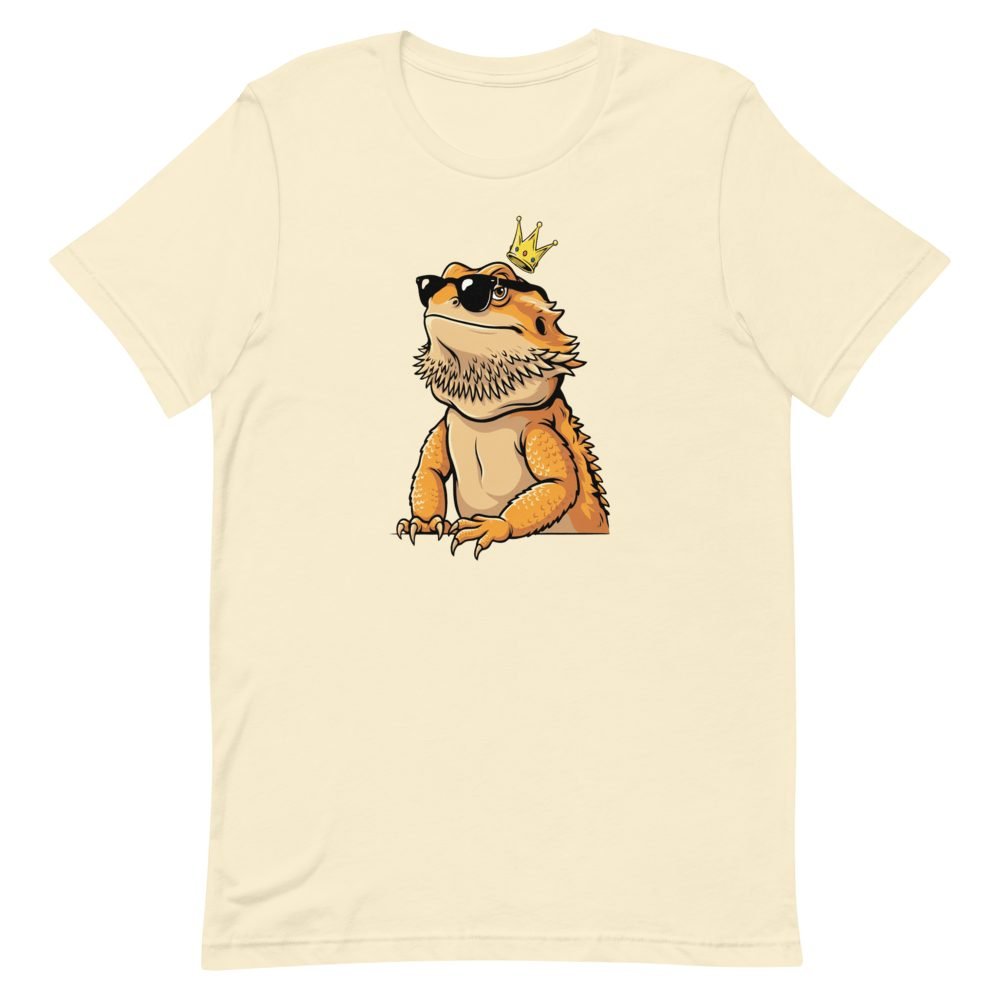
A good diet is a lot of love measured in teaspoons: the evening cube out of the freezer, the first mealworm taken from your fingers. Our shop is small and reptile-first right now, so if your home happens to have a bearded dragon alongside the gliders, our Bearded Dragon Crown Sunglasses King T-Shirt is made for keepers who take every one of their animals seriously.
For the keeper with more than one kind of animal
Gliders at night, a dragon basking by day? The Bearded Dragon Crown Sunglasses King T-Shirt is for keepers whose homes run on more than one schedule.
Questions to bring to your vet
NC State recommends a yearly exam for every sugar glider, and a diet review is one of the most useful parts of it. Bring your recipe (or the brand label) and your weight log, and ask:
- Which base do you recommend for my gliders: nectar-first, pellet-and-nectar, or something else?
- How should I supplement calcium and vitamin D3, which product should I use, and how much?
- What should the protein share be, and is gut-loading enough or should I dust insects too?
- Given what my glider leaves behind, how should I change how I serve the food?
- What’s a healthy weight range for each of my gliders, and what change should prompt a call?
Find a vet who sees sugar gliders before you need one. VCA’s guidance draws on the Association of Sugar Glider Veterinarians, a useful name to know when searching. NC State notes your vet may suggest sedation for a thorough exam. That’s routine, not a sign something is wrong.
Sugar glider diet FAQ
How much does a sugar glider eat a day?
Less than most people expect: VCA gives roughly 15–20% of body weight a day. NC State’s plan is ¼–½ frozen cube of Leadbeater’s, about 1 teaspoon of pellets, and 2–3 teaspoons of produce per glider per day. Let your glider’s weight trend, and your vet, guide adjustments.
Can sugar gliders eat fruit every day?
Yes, in small amounts. All the veterinary sources include fruit, and all of them keep it a minor share of the diet, because gliders will happily fill up on fruit and skip everything else. VCA puts it simply: offer “only a small portion of fruit.”
Do sugar gliders need a calcium supplement?
Every plan reviewed here includes calcium, mixed in, sprinkled on, or through gut-loaded or dusted insects. Which product and how much is a question for your vet. Don’t combine supplements on your own.
Can sugar gliders have honey?
Honey is one ingredient in NC State’s balanced, supplemented Leadbeater’s mix. Offering it on its own is different: sugar with nothing to balance it. Keep plain honey, syrups, and sweet treats to a minimum.
What should I do if my sugar glider stops eating?
Call an exotics vet right away. NC State notes that gliders that aren’t feeling well can run out of energy reserves very quickly. A glider that stops eating, especially with weakness, tremors, or seizures, needs to be seen the same day.
Is there one “best” sugar glider diet?
Not on current evidence. Purdue says ideal captive diets haven’t been developed, and the 2017 study found popular diets that look balanced on paper can still leave gliders short on calcium or overweight. The best sugar glider diet is the one your vet helps you choose and your glider actually eats in full.
You don’t have to win the diet wars to feed your gliders well. Pick a vet-guided plan, watch what’s left in the bowl, weigh your gliders, and adjust. That steady attention is the part no recipe can do for you, and it’s the part that matters most.
Before you go
Keep learning your animal
We publish a new guide every day. The best of them land in one short weekly email, so you never miss the one about your species.

Alex Johnson stands at the forefront of exotic pet expertise, with a particular affection for the misunderstood beauty of tarantulas. With years of experience caring for a range of unique animals, from sugar gliders to chinchillas, Alex brings a wealth of knowledge to the exotic pet community.