Leopard Gecko Tank Setup: Size, Substrate Safety, and Heating Done Right
Short answer: a leopard gecko needs more than a bare glass box with a heat lamp on top. A safe leopard gecko tank comes down to four things done right — enough floor space for the animal’s life stage, a substrate that won’t cause impaction, a real thermal gradient (not just “a warm corner”), and a humid hide to make shedding easy. Get those four right and almost everything else about leopard gecko care falls into place.
If you’ve searched “leopard gecko tank” recently, you’ve probably noticed something odd: the results are mostly shopping pages. Enclosure collections, a Reddit thread of tank photos, a product filter — not much that actually walks you through the decisions. This guide is the walkthrough. We’ll cover tank size by life stage, which substrates are safe versus risky, how to set up a real thermal gradient without heat rocks, hides and enrichment, the UVB question, and the signs that tell you your setup needs adjusting — or that it’s time to call a reptile vet.
Why “leopard gecko tank” searches mostly turn up shopping pages
Search “leopard gecko tank” today and the top results are enclosure collections from reptile retailers, a Reddit inspo thread of other keepers’ builds, and a handful of starter-kit product pages. There’s nothing wrong with buying a nice enclosure — but none of those pages actually explain why a given size, substrate, or heat source is the right call for your gecko specifically. They’ll sell you a tank. They won’t tell you that loose sand can cause a life-threatening impaction in an underweight juvenile, or why a heat rock is one of the more common causes of severe burns in pet reptiles.
That gap matters because a leopard gecko’s enclosure isn’t just furniture — it’s the entire world your gecko lives in, and small setup mistakes compound over months and years. This guide fills in what the shopping pages skip: the reasoning behind each decision, not just a parts list.
Leopard gecko tank size by life stage: hatchling, juvenile, and adult
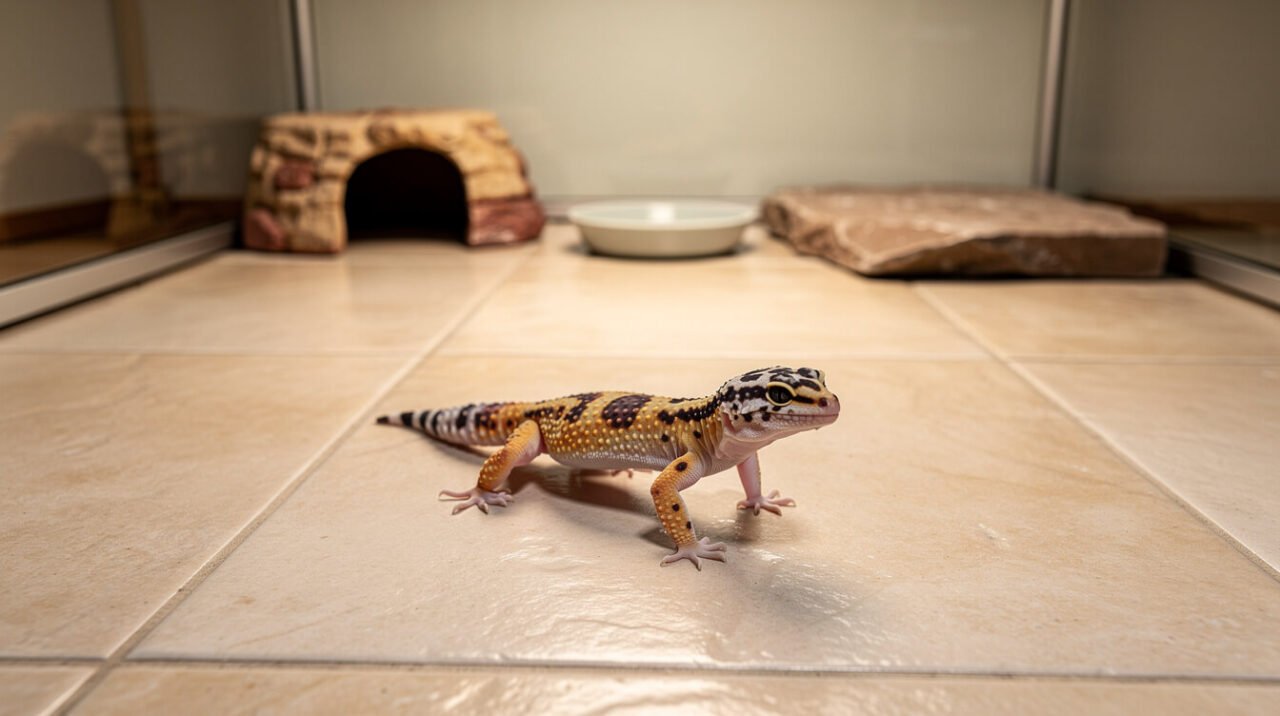
Leopard gecko housing needs change as they grow, and the size that’s fine for a hatchling can start to feel cramped for an adult.
Hatchlings and young juveniles
A small hatchling can start in a modest enclosure — commonly a 10-gallon tank (about 20 x 10 inches of floor space) — mainly because a huge open space can actually make it harder for a tiny gecko to find food and feel secure. Plenty of hides at this stage matter more than square footage.
Adults
For a single adult leopard gecko, a 10-gallon tank has traditionally been cited as a bare minimum, but most experienced keepers and several reptile-welfare organizations now recommend starting closer to a 20-gallon long (roughly 30 x 12 inches) or larger as the real baseline, with plenty of keepers going up to 36 x 18 inches or more. More floor space means room for a genuine thermal gradient (see below), multiple hides, and enrichment items like climbing rock and cork bark — all things that are hard to fit properly into a bare-minimum tank.
General rule of thumb: bigger is very rarely a welfare problem for a leopard gecko as long as there are enough hides to prevent them from feeling exposed; too small is where the real risks live. If you’re choosing between two tank sizes, size up.
Floor space matters more than height
Leopard geckos are ground-dwelling and don’t climb glass the way some arboreal species do, so a tall, narrow enclosure wastes space they’ll never really use. When you’re comparing tank options, prioritize floor footprint (length x width) over overall gallon count — a long, low 20-gallon “long” tank gives far more usable space than a tall 20-gallon “high” tank with the same volume. Front-opening enclosures (glass or PVC) also tend to be less stressful to clean and maintain than top-opening tanks, since you’re not reaching down from above the way a predator would.
For related sizing and life-stage context, our leopard gecko lifespan guide covers how a properly sized, well-maintained setup connects to a longer, healthier life.
Substrate: what’s safe, and what risks impaction
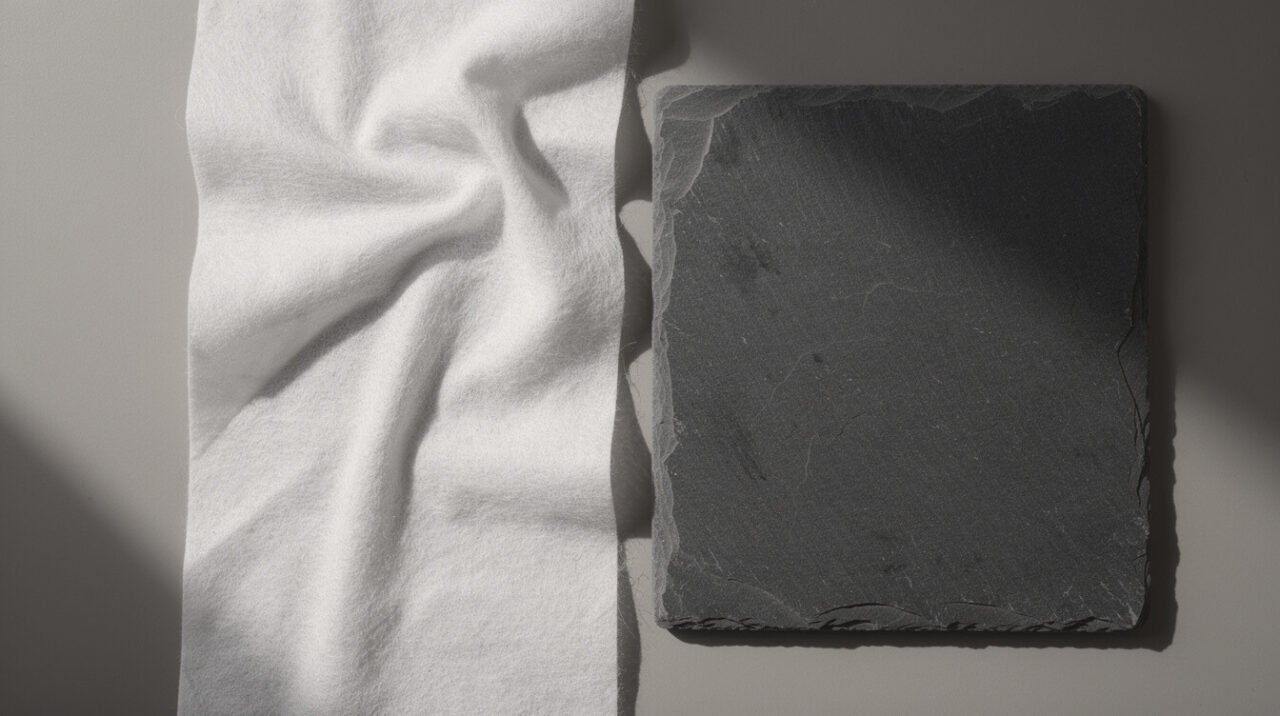
Substrate is where we see the most disagreement online — and where the shopping-page results tend to say the least.
The safest choices
Paper towels, reptile carpet, and large ceramic or slate tile are the lowest-risk substrates, especially for hatchlings, juveniles, or any gecko that’s underweight or recovering from illness. They’re easy to clean, cost little, and carry essentially no impaction risk.
Where the real risk is: loose, particulate substrate
Loose substrates — play sand, calcium sand, walnut shell, and similar products — carry a genuine risk: if a gecko ingests substrate while hunting (which happens more than people expect, especially with young or underweight animals), it can cause a gastrointestinal impaction. That’s a real welfare emergency, not a minor inconvenience — impaction can require veterinary intervention and, in severe cases, surgery. This is the single biggest substrate-related risk that most product pages don’t mention at all.
If you want a more naturalistic look, experienced keepers do successfully run bioactive substrate blends (soil, clay, sand-like components, and a cleanup crew of isopods and springtails) in larger, well-established enclosures — but this is an intermediate-to-advanced setup, not a starting point for a first-time keeper, and it requires research into your specific blend and cleanup crew before switching a gecko over.
If you’re not sure a specific product is safe, a simple rule holds up well: when in doubt, use paper towels or tile until you’ve done more research or talked to a reptile-experienced vet.
Cleaning routine
Whatever substrate you choose, spot-clean waste and shed skin daily — leopard geckos often use one corner as a regular bathroom spot, which makes this quicker than it sounds. Paper towels or reptile carpet should get a full swap every few days to weekly; bioactive substrate is designed to be self-cleaning via its cleanup crew, but still benefits from occasional monitoring for compaction or mold.
Heating and thermal gradient: warm side, cool side, and avoiding heat rocks
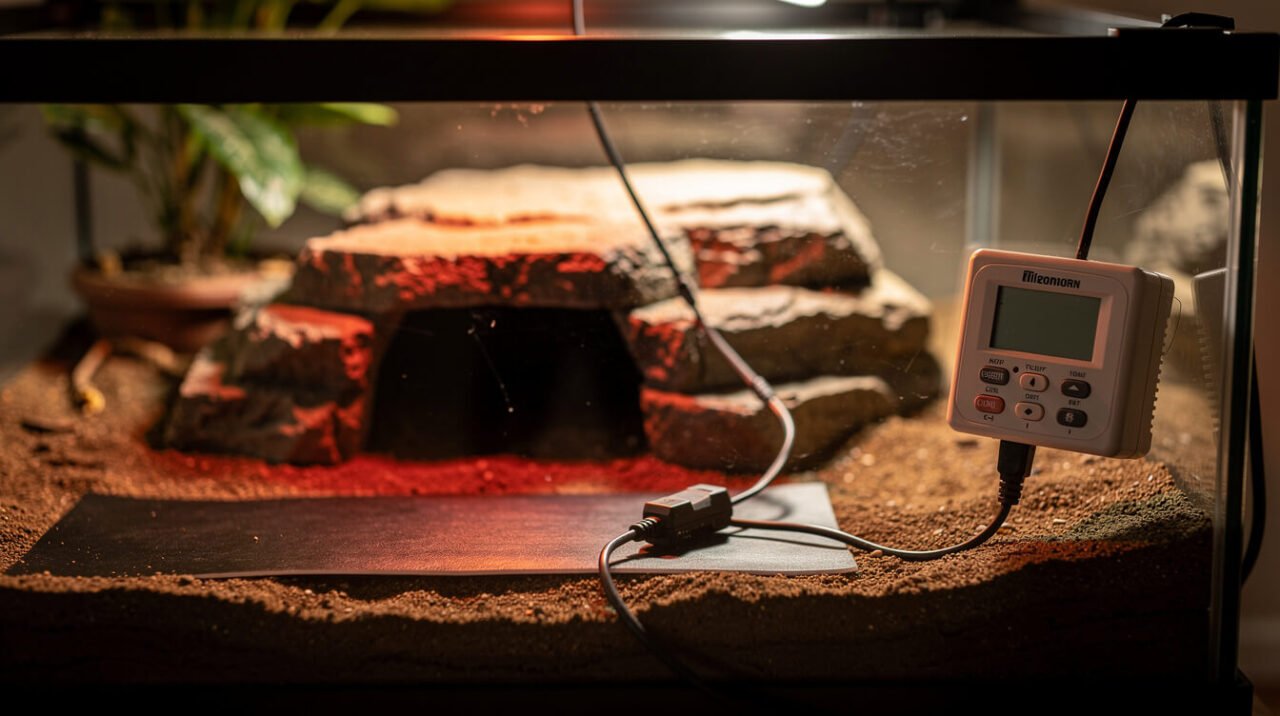
A leopard gecko can’t regulate its own body temperature the way we do — it moves between warmer and cooler areas of the enclosure to do that job, which means the single most important thing your setup provides is a real thermal gradient, not just “a warm tank.”
Setting up the gradient
The general target most reptile-care sources and experienced keepers use: a warm basking side in the high 80s to low 90s°F (measured at the surface where the gecko actually sits, not just the ambient air), and a cooler side in the mid-to-high 70s°F. Ambient room temperature typically supplies the cool end just fine in most homes. The heat source of choice for leopard geckos is an under-tank heating pad or a low-wattage overhead heat source, always run through a thermostat — never left to run unregulated — with the actual surface temperature checked using a digital probe thermometer, not just the dial on the heat mat’s built-in controller.
Skip the heat rock
Heat rocks are one of the more common causes of severe burns in pet reptiles because they can develop hot spots that exceed what a gecko’s skin can tolerate, and a gecko can’t always move away fast enough or recognize the danger the way it would with ambient heat. Reptile vets and herp-society care sheets consistently flag heat rocks as a setup to avoid — an under-tank heater or ceramic heat emitter on a thermostat is the safer, more controllable choice.
A nighttime temperature drop into the low-to-mid 70s°F is generally fine and mimics natural conditions — you don’t need to maintain daytime basking temperatures around the clock.
Placement affects your gradient too
Where the tank sits in your home matters more than people expect. A tank placed near a drafty window, an exterior door, or a heating/cooling vent can see its “cool side” swing well outside the target range depending on the season, throwing off the whole gradient even if the heat source itself is working correctly. Check both ends of the tank with your probe thermometer at different times of day for the first week or two after any move or seasonal change, rather than assuming a one-time setup reading holds year-round.
The weekly care guide
Get it right for your animal, every week
One email a week: new care guides, species deep-dives, and the safety answers keepers search for, written by our specialists. No spam. Unsubscribe anytime.
Hides, humid hide, and enrichment basics
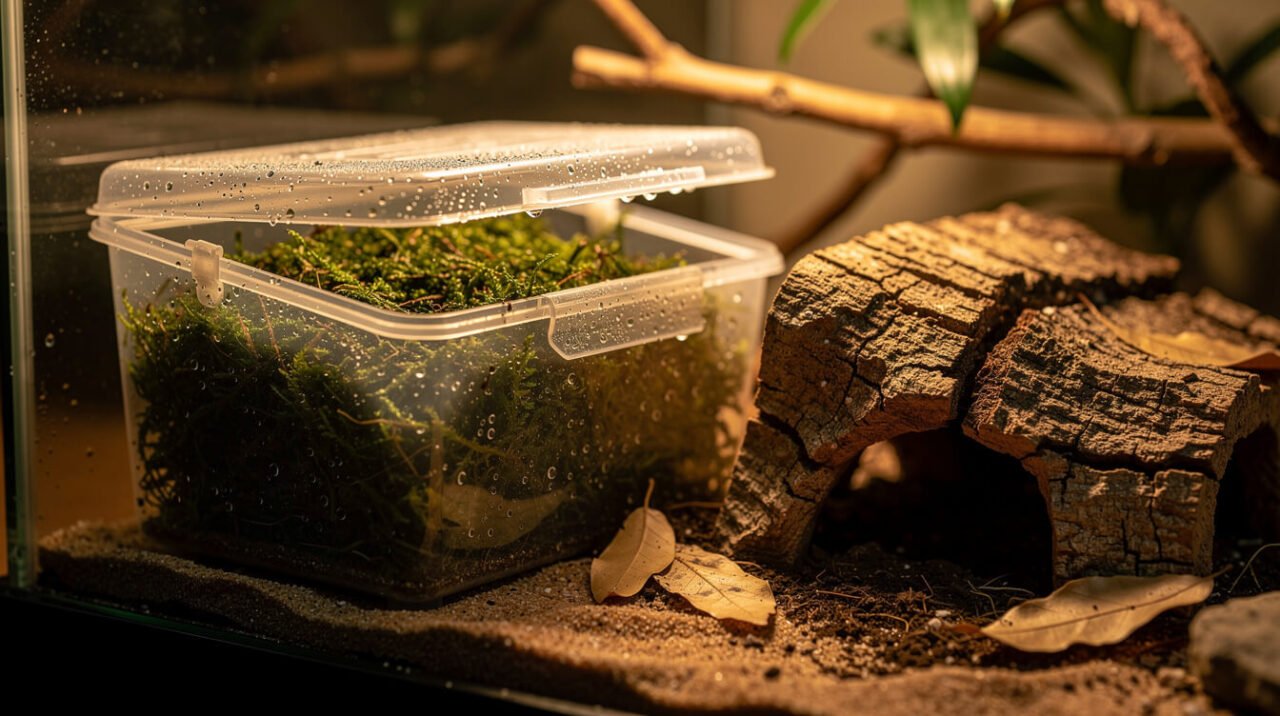
A leopard gecko that doesn’t feel secure is a stressed leopard gecko, and hides are how you fix that.
The three-hide setup
Most experienced keepers aim for at least three hides: one on the warm side, one on the cool side, and a dedicated humid hide. The humid hide — typically a container with a hole cut in the lid, filled with damp sphagnum moss or coco fiber — gives your gecko somewhere to retreat to elevated humidity, which matters most around shedding. Leopard geckos that don’t have access to a humid hide are more prone to incomplete sheds, which can leave retained skin around the toes and tail that, left unaddressed, can restrict blood flow.
Enrichment beyond hides
Climbing structures (cork bark, rock ledges kept low enough to prevent fall injuries), a shallow water dish that’s cleaned regularly, and occasional rearranging of enclosure items all give a gecko more to explore. None of this needs to be elaborate or expensive — the goal is a space that gives your gecko choices, not a bare box with a single hide in the corner.
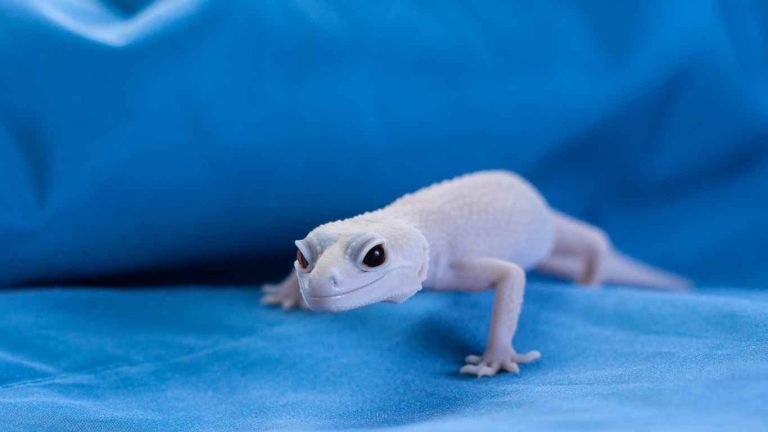
Our guide to the albino leopard gecko morph covers how enclosure choices can matter even more for light-sensitive morphs that benefit from dimmer basking areas.
Lighting: do leopard geckos need UVB?
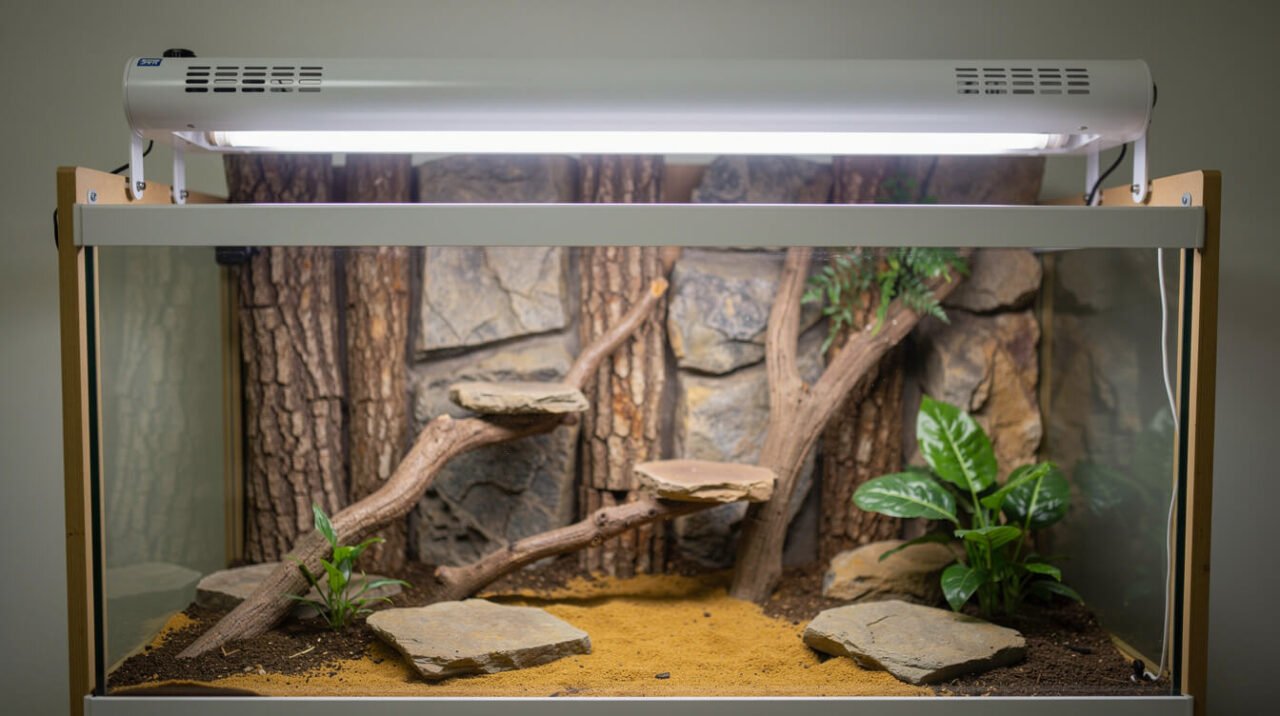
This is one of the most-debated questions in leopard gecko care, and the honest answer is that the consensus has shifted. For years, leopard geckos were considered nocturnal enough that UVB lighting was treated as unnecessary. More recent husbandry guidance — reflecting input from reptile veterinarians and wider research into crepuscular species — leans toward offering a low-level UVB source (paired with a shaded retreat so your gecko can opt out of it) as a genuine benefit for calcium metabolism and overall health, even though leopard geckos can technically survive without it if fed a properly dusted, calcium-supplemented diet.
If you do add UVB, look for a low-output bulb designed for crepuscular/nocturnal species rather than a high-output desert bulb meant for a bearded dragon, and always provide shaded hides so your gecko can move away from the light entirely. If you’re unsure what’s right for your specific setup, this is a good question to bring to a reptile-experienced vet — UVB strength, distance from the basking spot, and bulb lifespan all affect how much benefit (or risk of overexposure) it provides.
Water, humidity, and everyday maintenance
Beyond the big four (size, substrate, heat, humid hide), a few smaller habits keep a leopard gecko tank running well day to day.
Water dish
Keep a shallow, sturdy water dish available at all times, positioned on the cooler side so it doesn’t evaporate as fast near the heat source. Change the water daily and give the dish a real scrub weekly — stagnant water is one of the easiest ways for bacteria to build up in an otherwise clean enclosure.
Tracking ambient humidity
A basic digital hygrometer (often the same combo unit as your thermometer) tells you your general ambient humidity, which is useful context even though the humid hide is doing the real work for shedding. Most sources put a comfortable ambient range for leopard geckos in the roughly 30-40% range outside the humid hide itself — much higher ambient humidity for extended periods can contribute to respiratory or skin issues, so the humid hide (not the whole tank) should be your primary humidity tool.
A note on gear
You don’t need to buy everything at once, but a digital probe thermometer/hygrometer combo, a reliable thermostat, and a properly sized humid hide are worth prioritizing over decorative extras — they’re the tools that actually let you verify your setup is doing what it’s supposed to, rather than guessing.
Signs your setup isn’t working — and when to call a reptile vet
A well-set-up tank should mostly let you relax. Watch for these signs that something needs adjusting:
- Persistently hiding on one side only — may mean your gradient is off, or one side is too hot or too cold.
- Retained shed around the toes, tail tip, or eyes — often points to low humidity or a missing/ineffective humid hide.
- Weight loss, sunken tail, or reduced appetite — the tail stores fat reserves, so a noticeably thin tail is worth taking seriously.
- Lethargy, tremors, or difficulty moving — can be linked to calcium deficiency or metabolic bone disease, especially without adequate dusted-food supplementation.
- Visible burns, blistering, or wounds — an emergency; stop using the current heat source immediately.
A properly set up tank prevents most of these issues before they start, but if you’re already seeing any of them, this is exactly the point where we’d say: please don’t try to self-diagnose or wait it out. See a reptile-experienced veterinarian. Setup adjustments can fix ongoing husbandry issues, but they can’t undo an active health problem — and a vet visit is always the right call over guessing.
Frequently asked questions
What size tank does a leopard gecko actually need?
A 10-gallon tank is the traditional bare minimum for a single adult, but a 20-gallon long or larger is what most experienced keepers recommend today. Bigger is rarely a problem as long as you provide enough hides.
Can two leopard geckos live in the same tank?
Leopard geckos are generally kept solo. Housing two together — especially two males, which can be seriously aggressive toward each other — introduces stress and injury risk that a single, well-set-up tank avoids entirely. If you’re considering cohabitation, talk to a reptile-experienced vet or herp society first.
Is sand substrate ever safe for a leopard gecko?
Loose sand carries a real impaction risk, particularly for hatchlings, juveniles, or underweight geckos. Paper towels, reptile carpet, or tile are the safer starting choice; bioactive setups with sand-like components are an advanced option, not a beginner one.
How do I know if my tank’s temperature is actually right?
Don’t rely on a heat mat’s built-in dial alone — use a separate digital probe thermometer at gecko level on both the warm and cool sides to confirm your actual gradient, and adjust your thermostat from there.
Do I need a UVB light for my leopard gecko?
Not strictly required if your gecko’s diet is properly calcium-dusted, but current guidance increasingly favors offering a low-level UVB source with a shaded retreat as a health benefit. Ask a reptile vet if you’re unsure what’s right for your setup.
Wear the obsession
Bearded Dragon Crown Sunglasses King T-Shirt
Price range: $24.99 through $26.99
Shop this designFinal thoughts: building a tank your gecko can actually thrive in
None of this requires an expensive, elaborate build. It requires the right size for your gecko’s life stage, a substrate that won’t hurt them, a real thermal gradient checked with an actual thermometer, a humid hide, and — if you choose to add it — UVB done thoughtfully. Get those right, and you’ve built something the shopping pages never quite explain: an enclosure that’s genuinely good for your gecko, not just good-looking.
For more on how a solid setup supports a long, healthy life, see our guides on leopard gecko lifespan, the albino leopard gecko morph, and best reptiles for beginners if you’re just starting your reptile-keeping journey. If you keep other gecko species too, our crested gecko morphs guide is a good next read.
Before you go
Keep learning your animal
We publish a new guide every day. The best of them land in one short weekly email, so you never miss the one about your species.
Dr. Zoe Santos is a distinguished herpetologist and a revered expert in the care, conservation, and study of reptiles and amphibians. With a PhD in herpetology and over 18 years of field and academic experience, Zoe brings a depth of knowledge to her readers that is both rare and invaluable.