Ball Python as a Pet: The Honest Picture Before You Bring One Home
Thinking about a ball python as a pet? Here is the honest short answer. For the right person, a ball python is one of the most rewarding reptiles you can keep. It’s calm, usually gentle in the hand, a manageable 3 to 5 feet long as an adult, and it doesn’t need daily feeding or walks. But “easy” undersells it. This is a 20- to 30-year animal that needs precise heat and humidity, it may refuse food for weeks at a time, and it comes from a trade that has a real welfare and conservation story behind it.
The care sheets don’t agree with each other, either. One rates the species “Beginner,” another “Intermediate,” and recommended adult enclosures range from 40 gallons to roughly three times that. Below, we cover who a ball python suits, which setup numbers to trust, what the research says about enclosure size, how to buy one responsibly, and what life with one looks like. If you finish this and decide to wait, that’s a good outcome too.
Is a ball python a good pet? The honest short answer
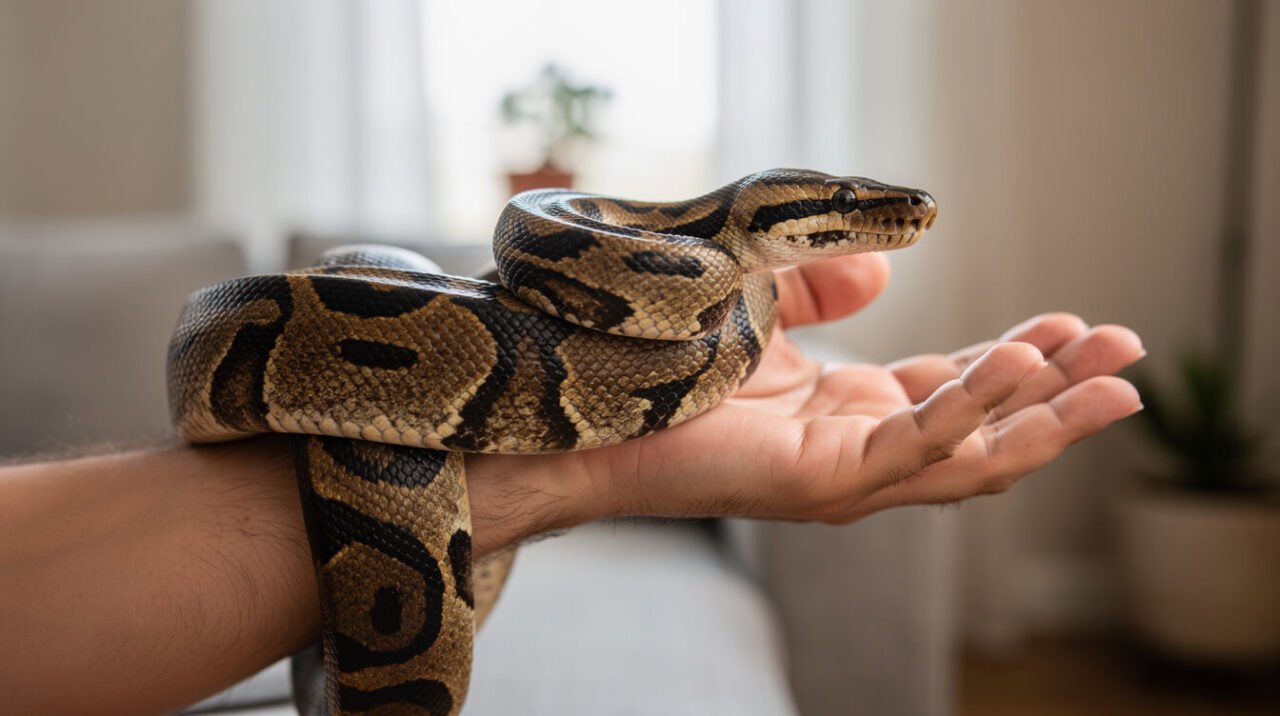
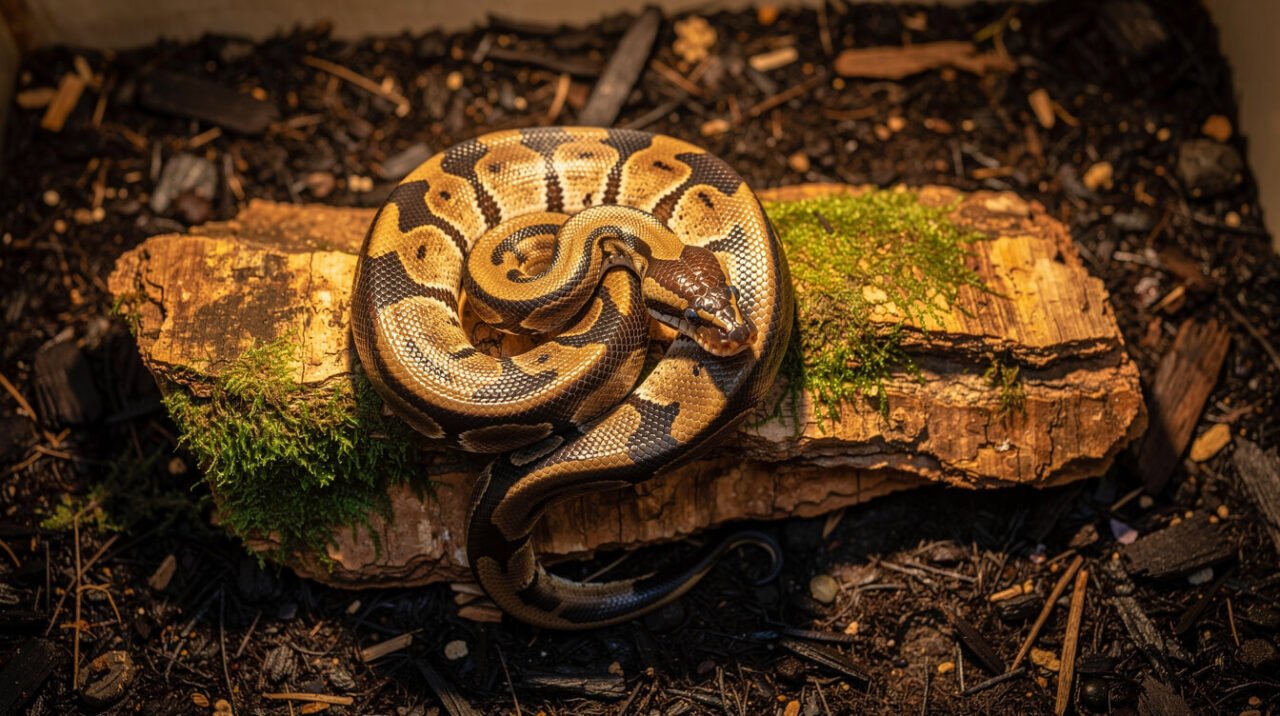
Ball pythons (Python regius, also called royal pythons) come from the grasslands, open forests, and farmland of West and Central Africa. They spend much of their lives in burrows, they’re most active around dusk and at night, and when they feel threatened they curl into a tight ball with the head tucked in the middle. That last habit is a big part of their appeal. A frightened ball python is much more likely to hide its head than to bite.
Who a ball python suits
A ball python tends to be a great match if you:
- Enjoy getting the details right. Most of this species’ care comes down to temperature, humidity, and patience.
- Want an animal you can watch and handle calmly, but not one that needs your company. Snakes don’t get lonely, and a ball python doesn’t need play or attention the way a dog or a parrot does.
- Are comfortable with whole-prey feeding. You’ll be thawing a frozen rodent every week or two.
- Can plan decades ahead. This is the part people most often underestimate.
Who should probably wait
Be honest with yourself if you’re hoping for an interactive pet, if your housing situation might change in ways that rule out a 4-foot enclosure, or if the idea of a snake that won’t eat for two months would keep you up at night. Households with very young children need to think carefully too, for hygiene reasons we cover in the health section below.
Why the “difficulty” ratings disagree
Three widely read sources give three different answers. PetMD’s care sheet lists the difficulty as “Beginner.” PetSmart says ball pythons are “often recommended for reptile keepers with some basic experience.” ReptiFiles, one of the most thorough husbandry references online, rates them “Intermediate.” All three are describing the same animal. The difference is what each one is rating.
The temperament is beginner-friendly. Ball pythons are docile, and their bites are rare and minor. The husbandry is not. Holding a stable heat gradient and 60 to 80 percent humidity in a properly sized enclosure takes some equipment and some learning. So our answer is this: a ball python can be a good first snake for a careful beginner who treats the setup as the real work. It’s a poor choice for anyone who has been told it’s “low maintenance.”
The commitment, in numbers
Most care sources put the captive lifespan at 20 to 30 years, and well-kept individuals have lived far longer. We go through the real records, and what shortens a ball python’s life, in how long ball pythons live. A ball python bought at 25 may still be with you at 50, so decide now who would care for it if you moved, had children, or couldn’t keep it.
The setup: why care sheets disagree, and which numbers to trust
If you put the popular care sheets side by side, the numbers don’t line up. Here’s how they compare on the three things that matter most:
| Source | Adult enclosure | Warm side / basking | Cool side | Humidity |
|---|---|---|---|---|
| PetMD | 40+ gallons | 95°F warm end | About 78°F | 40–60% (about 70% during shed) |
| PetSmart | 40 gallons minimum, and “at least as long as the snake’s body” | 85–90°F warm side, 90–92°F basking | 80–85°F | 60–80% |
| WWF responsible-pet guide | Room to stretch out full length | 90–92°F basking | 80–85°F general | 60–80% |
| ReptiFiles | 48″ × 24″ × 24″ for snakes over 3 feet | 86–90°F warm hide; air never above 95°F | 72–80°F | 60–80% by day |
Enclosure size: the biggest gap
A standard 40-gallon breeder tank is about 36 inches long. Most adult ball pythons are 3 to 5 feet long (we break down the real size data in how big ball pythons get). That means PetSmart’s own two rules contradict each other. A 40-gallon tank is only “at least as long as the snake” for the very smallest adults. ReptiFiles recommends 48 × 24 × 24 inches (about 8 square feet of floor) as the minimum for any ball python over 3 feet, and longer for a snake that keeps growing.
This is one of the rare care questions where there is some real research. A 2021 study in PLoS One (Hollandt, Baur, and Wöhr) housed 35 ball pythons first in a conventional rack system, which keeps each snake in a shallow plastic drawer. The same snakes were later moved into furnished terrariums sized to their body length. Basking, climbing, burrowing, and bathing showed up only in the terrariums, and abnormal behaviors that could indicate stereotypies were seen almost exclusively in the racks. The authors concluded that rack housing does not meet the bar for animal-appropriate housing. A separate 2021 study on corn snakes (Hoehfurtner and colleagues) compared enclosures two-thirds of the snake’s length with enclosures longer than the snake. In the longer ones, the snakes were more active and spent more time stretched out, and when given the choice, active snakes strongly preferred the larger space.
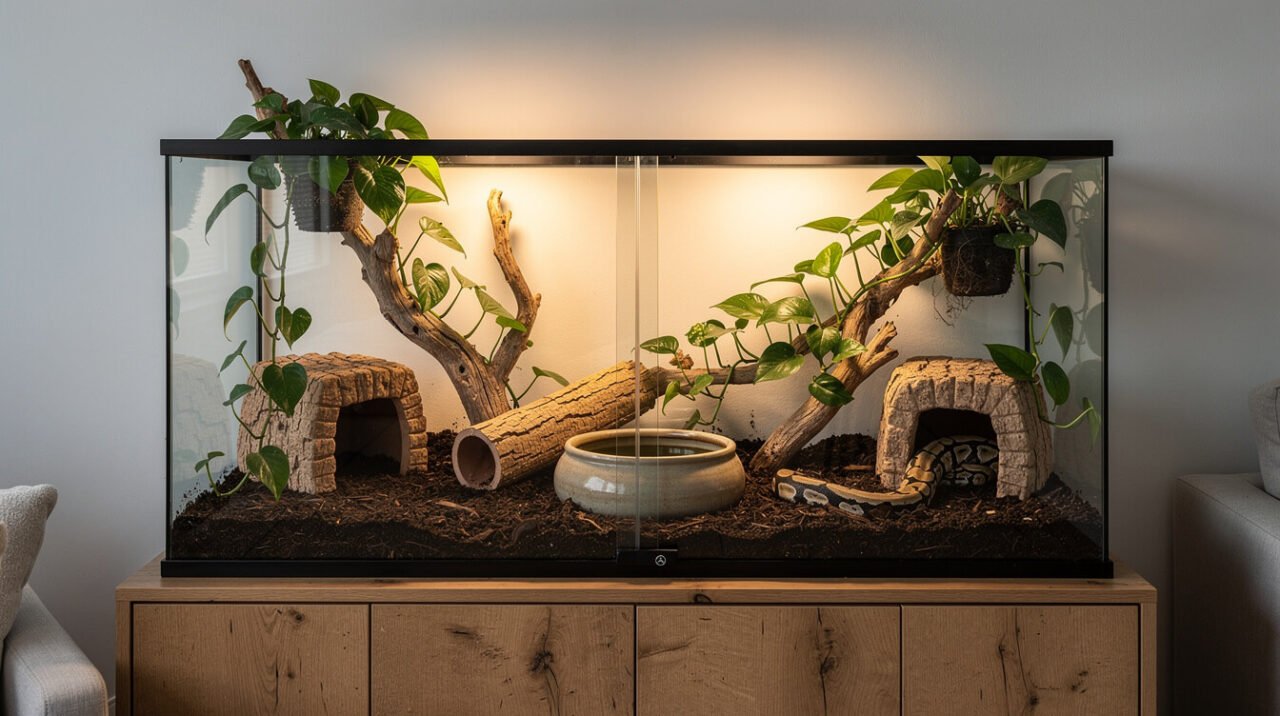
Neither study sets an exact minimum, and corn snakes are a different species, but both point the same way. Plan for an adult enclosure at least as long as your snake, which means about 4 × 2 × 2 feet for most adults. Fill it with plenty of cover so a shy animal never feels exposed. The old idea that ball pythons “prefer” tiny boxes confuses a tight hide with a tiny enclosure. Give them a big space with snug hides in it.
Temperatures: aim for the middle of the consensus
PetMD’s 95°F warm end is the ceiling ReptiFiles says the air should never exceed, so treat it as the top of the range, not a target. Across the other sources, the overlap is clear: a warm hide in the high 80s to about 90°F, a basking surface up to the low 90s, a cool side in the high 70s to around 80°F, and nights that don’t drop much below about 70°F. Two practical rules matter more than the exact numbers. First, every heat source goes on a thermostat. Second, measure with a probe at the snake’s level, inside the warm hide, not on the heat mat or the glass. If your snake’s vet suggests different targets for your individual animal, follow the vet.
Humidity: PetMD is the outlier
Most sources, and the climate data ReptiFiles cites from the species’ native range, point to 60 to 80 percent. PetMD’s 40 to 60 percent is the low outlier. In practice, the clearest sign that humidity is too low is a shed that comes off in patches or leaves the eye caps behind. Whatever range you aim for, add a humid hide lined with damp sphagnum moss. That way your snake can find moisture when it needs it, even if the room dries out in winter. Replace the moss often so it doesn’t mold.
For the heating and lighting principles that apply across species, our complete reptile care guide covers gradients, thermostats, and UVB in more depth.
What it really costs to keep a ball python as a pet
Prices vary too much by region and morph to quote reliably, so here’s the honest shape of the cost. With a ball python as a pet, the snake is often the cheapest thing you buy. A captive-bred, normal-colored ball python frequently costs less than the enclosure it will live in.
The one-time setup
- An adult-size enclosure (about 4 × 2 × 2 feet), ideally front-opening with secure locks. ReptiFiles warns never to tape a lid shut, because snakes can be badly injured on the sticky side.
- A heat source plus a thermostat. The thermostat is not optional. An unregulated heat mat can burn a snake and is a fire risk.
- Two digital thermometers and a hygrometer, so you can read the warm and cool sides at the same time.
- At least two hides (one warm, one cool), plus a humid hide.
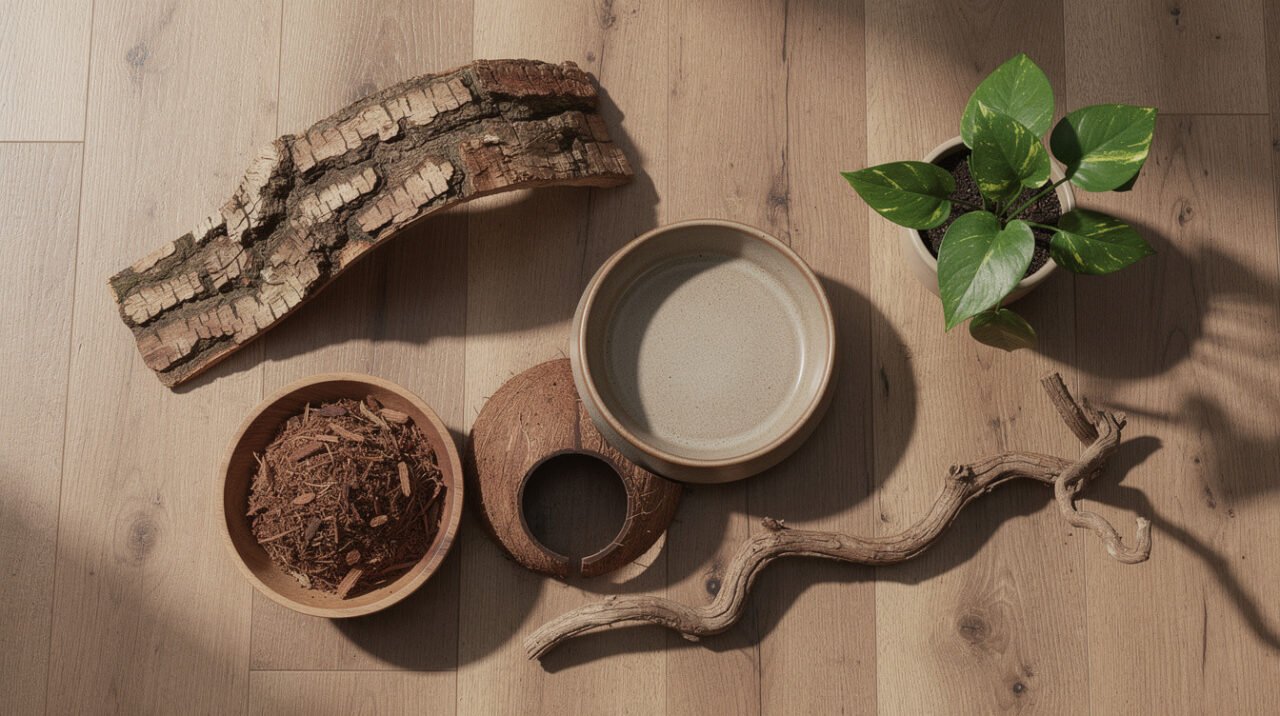
- A water bowl big enough to soak in, deep, humidity-holding substrate such as cypress mulch or coconut fiber, branches, and cover. Avoid cedar and pine, whose oils can irritate a snake.
- Optional low-strength UVB. Sources disagree on whether a ball python needs it. PetMD recommends it, PetSmart calls it optional but recommended, and ReptiFiles argues it’s beneficial. If you add it, the bulb is a recurring cost. PetMD says to replace bulbs every six months, while ReptiFiles says every 12 months for the T5 HO tubes it recommends. Follow the maker’s guidance for the bulb you buy.
The ongoing costs
- Frozen rodents, every week or two, for decades. Buying in bulk from a reputable supplier usually costs less per meal.
- Electricity for heat, which depends on how warm your home is.
- Substrate replacement every few months, plus spot cleaning every time your snake goes to the bathroom.
- A reptile vet. Plan for an exam soon after you bring your snake home and a yearly checkup after that, with a fecal parasite test. In many areas, reptile vets are harder to find than dog and cat vets, so find one before you buy.
Feeding: frozen-thawed, and the fasts nobody warns you about
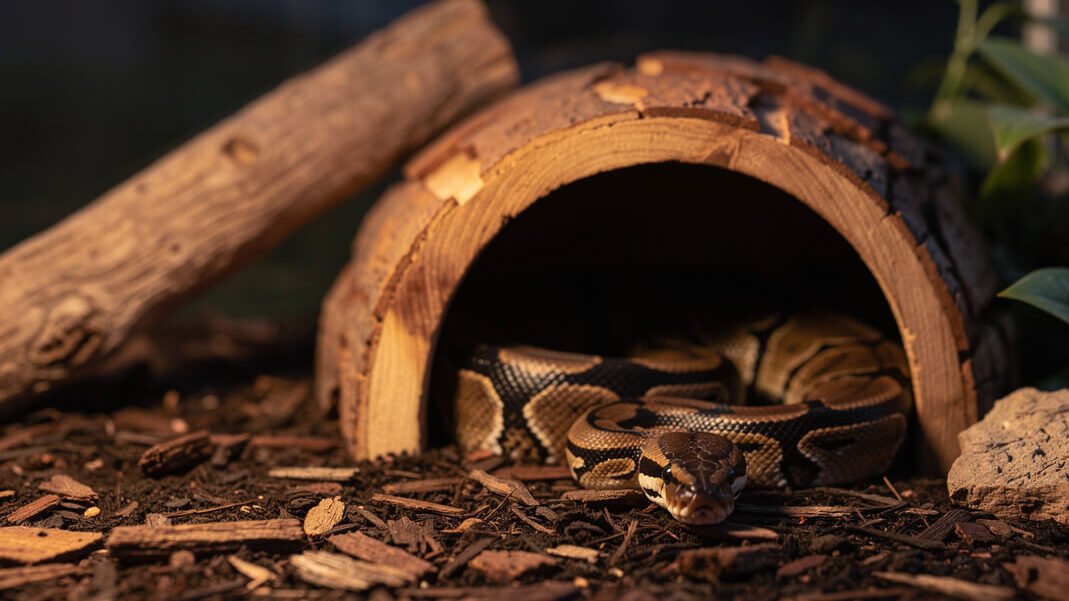
Ball pythons eat whole prey, usually mice for young snakes and rats for adults. Frozen-thawed is the welfare standard. PetMD, PetSmart, and ReptiFiles all prefer it, because a live rodent left in an enclosure can bite and seriously injure a snake. Thaw prey in a sealed bag, warm it in warm water just before feeding, and offer it with long tongs. Never use the microwave. The CDC adds a household-safety rule that’s easy to miss: never thaw frozen rodents in the kitchen sink or food-prep areas. Many keepers use a dedicated freezer and a dedicated thawing container.
How big, and how often
Here’s another place where the sources measure things differently. PetMD and PetSmart size prey by eye: no wider than the widest part of your snake’s body. ReptiFiles sizes it by weight, recommending prey at about 10 to 15 percent of the snake’s body weight (40 to 60 grams for a 400-gram snake). The weight method is easier to get right, and you’ll want a kitchen scale anyway. For frequency, PetSmart suggests about once a week for young snakes, moving to every 10 to 14 days for adults. Your vet can help you adjust if your snake is gaining or losing too much.
The fasts are normal, but you still need to watch them
This is the part most “perfect pet” pages leave out. Healthy ball pythons sometimes refuse food for weeks or even months, often during cooler times of year. Males also tend to fast during breeding season. ReptiFiles notes that young adult females around 1,000 grams are especially known for it, something keepers call “the Wall.” A new snake may also refuse food for the first week or two after coming home, simply from the stress of the move.
The way to tell a normal fast from a health problem is the scale, not the calendar. Weigh your snake regularly and keep a log. If your snake refuses food, check temperatures and humidity first, and look for an upcoming shed (cloudy, blue-tinged eyes are the giveaway). PetSmart advises seeing a reptile vet after three missed feedings in a row. ReptiFiles’ line is weight loss of more than about 10 percent of body weight. Either way, if your snake is losing weight, seems lethargic, or shows any other symptoms along with the fast, call your vet rather than waiting.
The weekly care guide
Get it right for your animal, every week
One email a week: new care guides, species deep-dives, and the safety answers keepers search for, written by our specialists. No spam. Unsubscribe anytime.
Where your snake comes from: captive-bred, ranched, and morph welfare
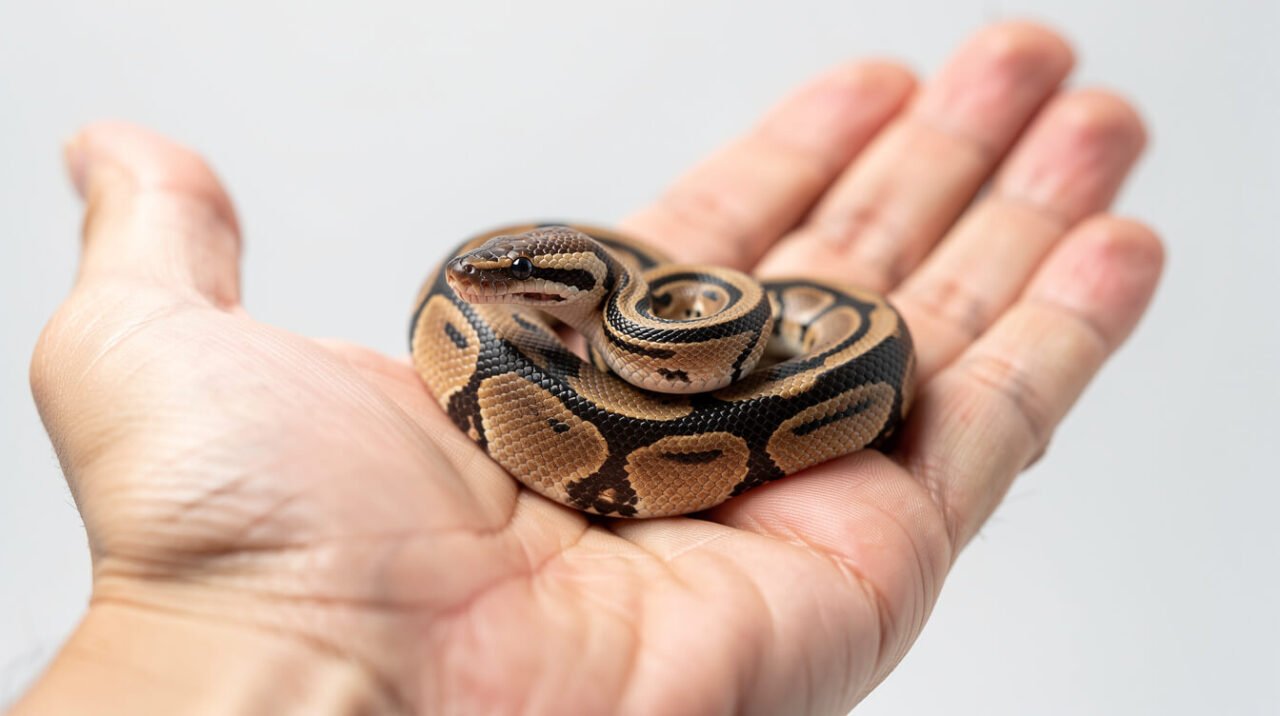
Most buying guides skip this, and it matters. A 2020 review in Nature Conservation (Harrington and colleagues) describes the ball python as the most traded CITES-listed live animal exported from Africa. CITES trade records document between three and four million live ball pythons exported from their range states since 1975. Almost all of the export trade now runs through three countries, Benin, Ghana, and Togo, and the United States has been the largest importer from all three. The species is listed on CITES Appendix II, which means international trade is allowed but regulated. WWF’s responsible-pet assessment rates the species moderate risk for both conservation and animal welfare.
Captive-bred vs. “ranched” vs. wild-caught
The same review found that trade records shifted from mostly wild-caught snakes to mostly “ranched” ones. Under CITES, ranched animals are taken from the wild as eggs or juveniles and then reared in a controlled environment. That isn’t the same as captive-bred, even if both are young snakes in a shop. The authors also flagged inconsistent labeling between countries. Wild-origin ball pythons often carry internal parasites, too. Chicago Exotics Animal Hospital recommends an annual fecal exam partly for that reason.
The good news is that ball pythons breed readily in captivity, so you don’t need an imported animal. Buy captive-bred, from a breeder or keeper who can tell you the hatch date and show you a feeding record. The best record shows the snake eating frozen-thawed prey. A snake that already takes frozen-thawed will make your first months much easier.
Consider adoption
Because ball pythons are so widely bred, and because they live so long, plenty of them end up needing new homes. Reptile rescues and herp societies often have adult ball pythons with known histories, and an established adult skips the fragile hatchling stage. The snakes in the Munich housing study above came from a reptile rescue, and 25 of the 35 had been placed in vetted private homes by 2021.
A word about morphs
Ball pythons come in thousands of color and pattern “morphs,” produced by selective breeding. Most are simply beautiful. One deserves a clear warning, though. The spider morph is associated with “wobble,” a neurological condition that causes twisting head movements, poor coordination, and trouble striking or constricting prey. In a 2022 PLoS One study (Starck and colleagues), every spider morph snake examined showed the wobble condition, and their inner-ear balance organs were malformed. A companion imaging study found similar inner-ear differences. If you’re choosing by looks, choose a morph without a known health problem. If you already have a spider ball python, you haven’t done anything wrong. Ask a reptile vet how its balance is affecting feeding and climbing, and how to adapt the enclosure to suit it.
Living with a ball python: handling, temperament, and enrichment
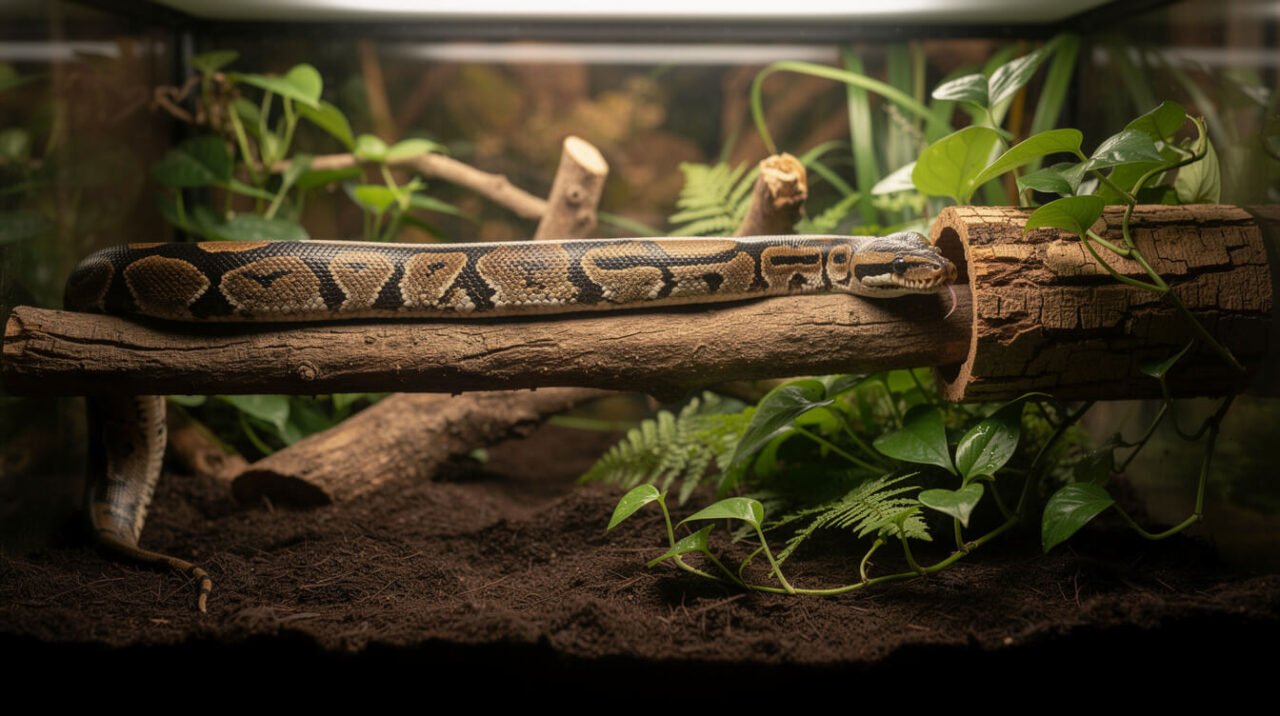
Here’s the good part. A settled ball python is a quietly wonderful animal to share a home with. Most of the action happens in the evening, when your snake leaves its hide to tongue-flick its way along the branches, test the corners, and sometimes soak in its water bowl. In a well-furnished enclosure you’ll see the climbing and burrowing the Munich researchers recorded. These animals are far more curious than their “pet rock” reputation suggests.
Handling without stress
Give a new snake time first. ReptiFiles recommends no handling for the first two weeks, or until the snake is eating regularly. After that, short, calm sessions work best. Support the body with both hands rather than gripping, and let the snake move through your hands. A few times to avoid handling:
- For a day or two after a meal. Handling a snake with a full stomach can cause it to regurgitate, which is hard on the snake.
- While it’s in shed. When the eyes turn cloudy blue, your snake can’t see well and is more likely to feel defensive.
- Straight after you’ve touched rodents. Wash your hands first, so you don’t smell like dinner.
Bites are uncommon and usually minor, and they’re nearly always a feeding mistake or a frightened snake. Using tongs at feeding time, and a gentle touch with a paper-towel tube or snake hook to let a snake know it’s “not food time,” helps a lot. Clean any bite well. PetSmart notes that medical attention may be warranted, since a snake’s mouth has been in contact with raw meat.
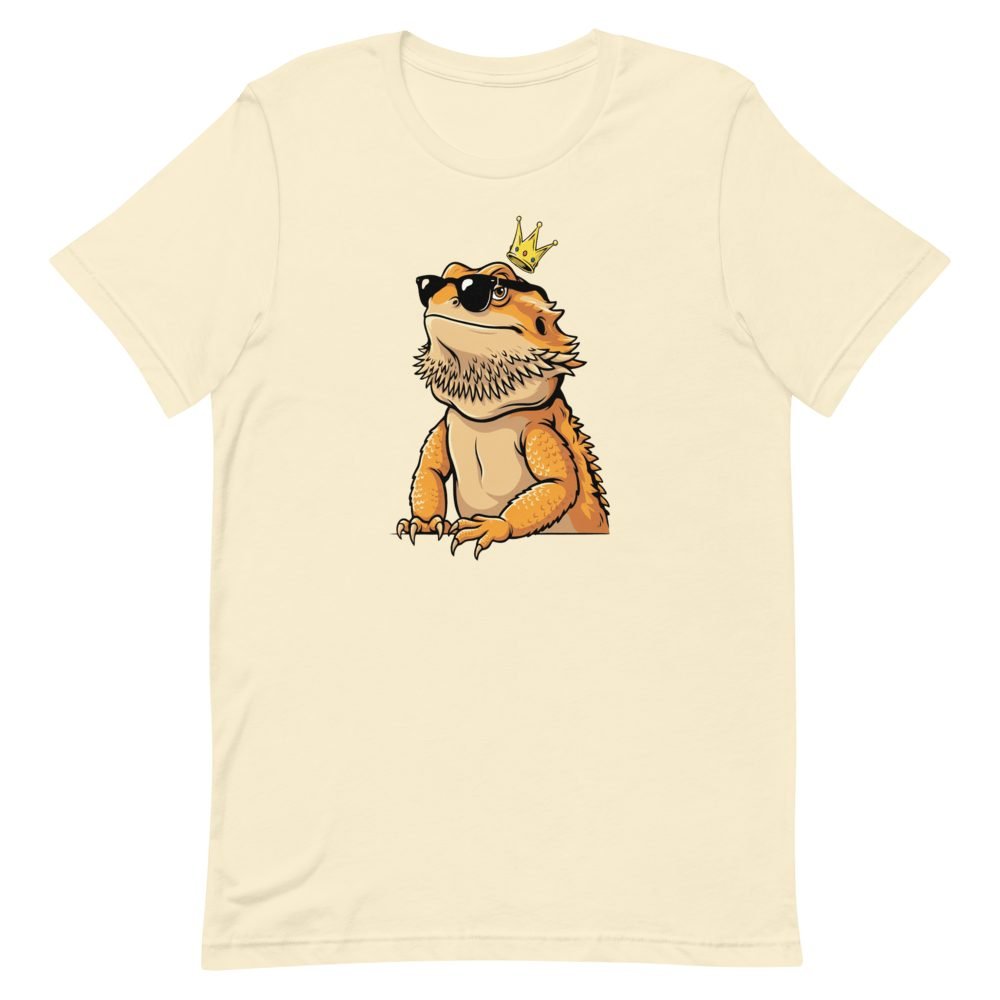
If your reptile room also includes a bearded dragon, or you just like wearing your hobby, our Bearded Dragon Crown Sunglasses King T-Shirt is the one design in our small shop right now. It’s for the lizard side of the room, but it’s made for keepers who are a little obsessed.
Wear the obsession
The Bearded Dragon Crown Sunglasses King T-Shirt is our reptile-room tee for keepers who log every weight and check every thermometer. It’s the one design in our small shop right now, so it stands in for the whole scaled crew, snakes included.
Enrichment that actually works
For a ball python, enrichment means a world worth exploring: deep substrate to push through, branches and cork bark at different heights (ReptiFiles notes that males especially climb), and enough clutter and foliage to cross the enclosure without feeling exposed. Moving a branch or adding a new hide now and then gives a curious snake something new to investigate. A big enclosure with no cover is stressful. A big enclosure full of cover is enrichment.
Health, hygiene, and finding a reptile vet
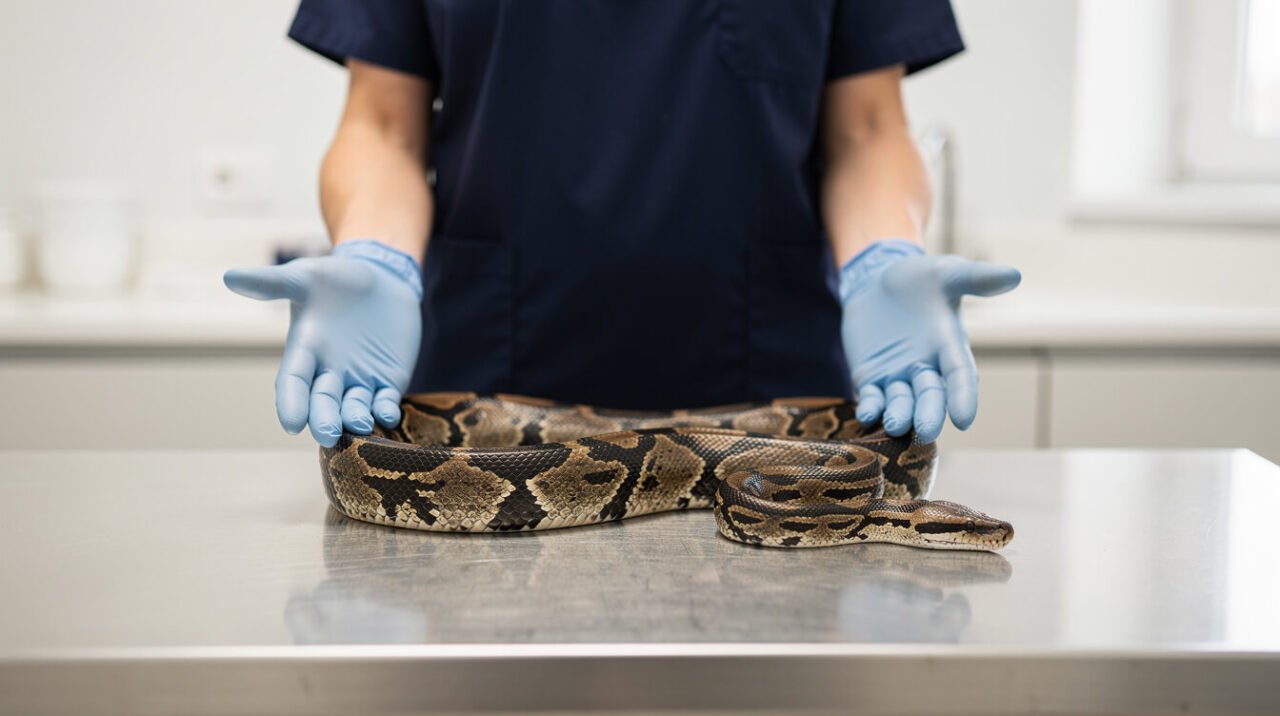
Most ball python health problems trace back to husbandry: heat that’s too low or uncontrolled, humidity that’s off, or a dirty enclosure. That’s why getting the setup right matters so much. Still, find a reptile-experienced vet before you need one. The Association of Reptile and Amphibian Veterinarians keeps a find-a-vet directory, and PetMD recommends a checkup once a year. Bring photos of your setup and the exact specs of your heating and lighting, so your vet can check your husbandry as well as your snake.
When to call your vet
We can’t diagnose your snake from here, and you shouldn’t have to guess. Call a reptile vet if you notice any of these signs, drawn from the lists published by PetMD, PetSmart, and Chicago Exotics Animal Hospital:
- Discharge from the eyes, nose, or mouth, wheezing, or difficulty breathing
- Weight loss, or a fast that comes with lethargy or other symptoms
- Stuck shed over the eyes, or skin that looks blistered, discolored, or wounded
- Swellings, lumps, or swollen joints
- Runny or unusual droppings, or discharge around the vent
- Trouble opening or closing the mouth
Tiny moving specks on your snake or in the water bowl can mean mites, which spread quickly. Treatment is a question for your vet, not a home remedy.
Salmonella and your household
Healthy reptiles can still carry Salmonella, which calls for good habits rather than fear. The CDC says children under 5 should not handle or touch reptiles or their environments. It also says reptiles aren’t recommended for households with young children, adults 65 and older, or people with weakened immune systems. Wash your hands after handling your snake, its prey, or anything in its enclosure. Keep the enclosure and its gear out of the kitchen, and pour wastewater down the toilet rather than the sink. If someone in your home falls into one of those groups, talk it through with your doctor before you bring a reptile home.
Ball python as a pet: frequently asked questions
Is a ball python a good pet for a child?
A ball python can be a good family animal for older children, with an adult responsible for its care. Remember that the snake may outlive a child’s time at home by a decade or more. For children under 5, the CDC’s advice is clear: they shouldn’t handle reptiles or touch their enclosures.
Is a ball python a good pet for a beginner?
Yes, for a careful beginner who treats the setup as the main job. If you’d like to compare options first, our guide to the best reptiles for beginners looks at other first reptiles too.
Can I keep two ball pythons together?
No. PetMD and ReptiFiles both say to house ball pythons alone. A cagemate isn’t company. It’s a competitor, and the stress can be enough to put a snake off its food.
Can a ball python live in a 40-gallon tank?
A hatchling or young juvenile can, comfortably. Most adults outgrow one, because a 40-gallon breeder is about 3 feet long and most adults are longer than that. Plan for about 4 × 2 × 2 feet for an adult, and set up a juvenile’s enclosure with plenty of cover so it feels secure.
Is my ball python sick if it won’t eat?
Not necessarily. Fasting is common in healthy ball pythons, especially in cooler months, during breeding season, and right after a move. Check your temperatures and humidity, look for signs of an upcoming shed, and weigh your snake. If it’s losing weight or showing any other symptoms, see your vet.
The bottom line
A ball python as a pet is a long, quiet partnership. You provide a warm, humid, well-furnished world, buy a captive-bred animal from a source you trust, and keep the scale and the thermometer honest. In return, you get decades with one of the gentlest, most fascinating snakes in the hobby. If you’re still reading, you’re exactly the kind of keeper a ball python deserves.
Before you go
Keep learning your animal
We publish a new guide every day. The best of them land in one short weekly email, so you never miss the one about your species.

Dr. Zoe Santos is a distinguished herpetologist and a revered expert in the care, conservation, and study of reptiles and amphibians. With a PhD in herpetology and over 18 years of field and academic experience, Zoe brings a depth of knowledge to her readers that is both rare and invaluable.