How Long Do Ball Pythons Live? The Honest Numbers, and What Cuts Them Short
Short answer: a well-kept ball python commonly lives 20 to 30 years, and 30-plus is a realistic target rather than a fantasy. The documented outer edge is far stranger — a female at the Saint Louis Zoo was estimated at 62 years old when she laid a clutch of eggs in 2020. So when you ask how long do ball pythons live, the honest answer is a range, an outlier, and a commitment: the hatchling in that deli cup has a plausible claim on your next three decades.
The trouble is that every page gives you a different number. One says 20 to 30, one says up to 40, one says at least 62 — and none explain why they disagree. That silence does real damage, because the spread is not confusion about snake biology. It is a measure of how much your husbandry decides the outcome.
The short answer: how long do ball pythons live, in captivity and in the wild
Three numbers, in order of how much they should matter to you.
1. The realistic expectation for a well-kept captive animal: 20 to 30 years. This is the figure almost every credible source converges on, and the one to plan your life around. Big Apple Herp puts it as “20 to 30+”; Wilbanks Reptiles and Ghost Constrictors both say 20 to 30; Wikipedia says ball pythons do “quite well in captivity, regularly living for 15–30 years with good care.”
2. The achievable ceiling with excellent care: 30 to 40 years. PetMD’s care sheet, reviewed by Dr. Maria Zayas, says “30 years or more.” The Reptile Rescue Center says “up to 30 – 40 years,” and Ghost Constrictors notes some documented captives have passed 40. This is not the median pet snake — it is what happens when temperature, humidity, diet, and veterinary care all go right for three or four decades running.
3. The wild figure: commonly quoted as 10 to 15 years, and genuinely uncertain. Wilbanks attributes the shortfall to no medical care, unreliable food and water, and injury from hunting — sound reasoning. The number itself is an estimate rather than a study result: we could not trace it to field research, and Wikipedia’s species account gives no wild lifespan at all. The BBC’s Discover Wildlife says it plainly about snakes generally — “Data is thin on the ground.” Treat 10 to 15 as a reasonable guess, not a measured fact.
One sentence to hold onto: a ball python that reaches its twenties has had decent care, one in its thirties has had excellent care, and one that dies at five almost always died of something preventable. That last clause is not a scolding — it is the reason this article exists.
Why every source gives you a different number
Search how long do ball pythons live and here is the actual spread you get back. We are showing you the disagreement rather than flattening it, because the disagreement is informative.
- Wikipedia: “regularly living for 15–30 years with good care”
- Wilbanks Reptiles (breeder and retailer): 20 to 30 years; elsewhere on the same page, “30+ years in captivity”
- Big Apple Herp (retailer): “typical lifespan 20 to 30+”
- Ghost Constrictors (breeder): 20 to 30, with some documented past 40
- PetMD (vet-reviewed): “30 years or more”
- Reptile Rescue Center: “up to 30 – 40 years”
- NW Reptiles: a good captive life is 20 to 30; one zoo recorded 47
- BBC Discover Wildlife: “at least 62 years in captivity”
Four different things are being measured here, and nobody labels which is which.
A typical outcome is not a ceiling. “20 to 30” describes what competent keepers generally see — a population, not a limit on an individual.
A ceiling is not a typical outcome. “30 to 40” describes the upper tail. Quoted as the expected lifespan, it sets a new keeper up to feel they failed when their snake dies at 24 of ordinary old age.
An individual record is neither. The 47-year and 62-year figures are single animals in institutional care, logged by professionals for decades. They show what the species is capable of. They are not a benchmark for your snake.
And a seller’s number carries a thumb on the scale. Not dishonesty — most of these pages are broadly accurate, and the breeders writing them often know the animals better than anyone. But a page ending in “browse our ball pythons for sale” has every reason to lead with longevity and none to describe the median pet ball python’s life. That median is dragged down hard by animals that die young from husbandry nobody ever explained to their owner.
Do not average these figures. An invented midpoint would be the one number here that no source supports.
The oldest ball python on record — and why “62” is an estimate, not a measurement
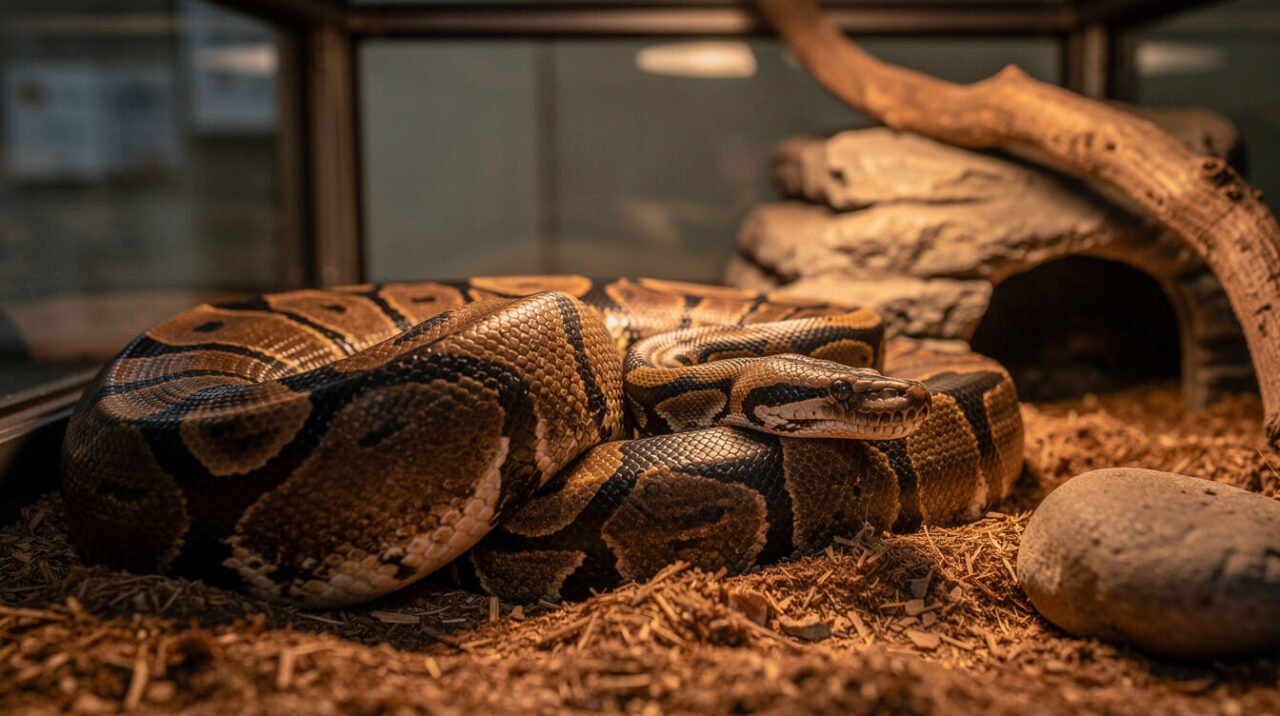
On July 23, 2020, a female ball python in the Charles H. Hoessle Herpetarium at the Saint Louis Zoo laid seven eggs. She had not been housed with a male in more than fifteen years.
She has no name. She has a number: 361003. She arrived at the zoo in 1961 from a private owner and was estimated to be about three years old at the time, which is how the widely repeated figure of 62 is arrived at. The St. Louis Post-Dispatch, which reported the clutch, phrased it carefully: the snake is “at least 62 years old.” The BBC was equally careful: “at an estimated 62 years old.” The zoo’s own public post that September was more conservative still, describing her as “over 50 years old (the oldest snake documented in a Zoo).”
That distinction is why this section exists. You will see “62” repeated across the internet as a hard figure — Wikipedia goes further and presents it as her age “at the time of her death,” a framing we could not trace to any primary source, so we are not repeating it as fact. The number is a careful institutional estimate built on a guess made about a snake in 1961. It is almost certainly in the right neighborhood, and it is still an estimate.
What makes her remarkable is not only the age. Mark Wanner, the zoo’s zoological manager of herpetology, told reporters that ball pythons typically begin laying at four to six years old and stop long before their sixties: “She’d definitely be the oldest snake we know of in history,” he said, to lay eggs. Two explanations were on the table — facultative parthenogenesis, reproduction without a male, documented in ball pythons as well as some rattlesnakes and Komodo dragons, or long-term sperm storage. The zoo sent samples for genetic testing.
It was not her first clutch, either: she laid in 1990, when keepers did not separate snakes during cage cleaning, and again in 2009, when none survived. Her only companion at the herpetarium was a male, number 389054, who was about 31 — a reminder that even an unremarkable zoo snake can quietly outlive a car.
And before her, the record belonged elsewhere: Wanner noted that the oldest documented ball python until then was a male at the Philadelphia Zoo who died at 47. That is the figure you will occasionally see quoted as “the oldest,” and both numbers are correct — they are just from different years.
Records tell you what the species can do under professional care across six decades. What your snake does is mostly decided by what follows.
What actually takes years off a ball python’s life
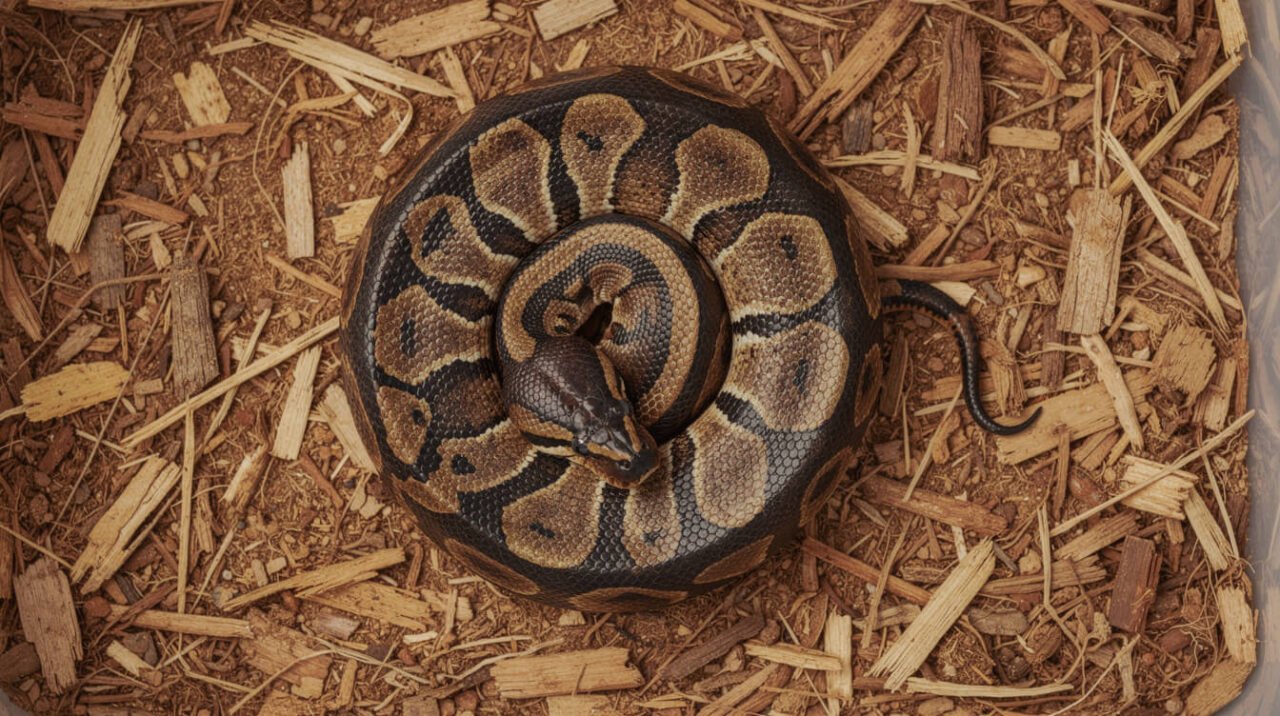
Most lifespan articles hand you abstractions: genetics, nutrition, enclosure, veterinary care. True, and useless. Here is the specific version, roughly ordered by how many captive ball pythons it affects.
1. Temperature and humidity that are quietly wrong
This is the big one, and it rarely announces itself. Veterinary Partner, the client-education arm of the Veterinary Information Network, states it directly: “Inadequate husbandry is the most common cause of immune suppression in snakes, often related to improper temperature and humidity, poor hygiene, and stress from excessive handling.” A snake kept a few degrees too cool does not die of cold. It digests poorly, mounts a weaker immune response, and eventually develops a respiratory infection — which VCA’s veterinary authors note is usually bacterial in snakes, and often appears alongside mouth rot. Interesting anatomical footnote: most snakes have one functional lung, but pythons and boas have both, which is small comfort when one of them is full of fluid.
What to do: measure, do not assume. Digital probe at the surface where the snake actually lies, on both ends, every day.
2. An enclosure that is too wet, too dry, or not clean enough
Both directions cause damage. VCA describes blister disease in snakes kept in environments that are too moist or dirty: fluid-filled lesions on the underside that are easy to miss, can become infected, and “if not treated promptly, may progress to severe skin damage, septicemia… and death.” In the other direction, snakes kept too dry retain skin when they shed and develop secondary bacterial infections. Neither kills in a week. Both shave years off across a long life.
What to do: spot-clean constantly, change substrate on a schedule, and read the hygrometer.
3. Live prey
This one is unambiguous, and it comes from the veterinary literature rather than from forum consensus. The Merck Veterinary Manual: “Feeding live rodents is not advised (and is illegal in many countries) because of the dangers of prey-induced trauma to lethargic reptiles and the welfare implications for the live prey.” PetMD’s care sheet is equally blunt — rodents “can become aggressive and cause severe wounds that may lead to life-threatening infections.” A rat bite to the spine or eye is a bad week for a mouse and a catastrophic one for a 900-gram snake.
What to do: frozen-thawed, warmed, offered with tongs. If your snake refuses frozen-thawed, that is a conversation with a reptile vet or an experienced keeper, not a reason to switch to live.
4. Obesity from power-feeding
Ball pythons reach adult size at around three years, per PetMD, and an adult does not need a weekly rodent. Overfeeding is now the more common error among attentive keepers — breeders and vets alike flag it, though we know of no study quantifying its effect on ball python longevity, so treat it as clinical and keeper consensus rather than a measured number. Merck adds a wrinkle: rodents frozen a long time, especially obese ones, may carry fewer nutrients and more surplus calories than you think.
What to do: feed to body condition, not to the calendar, and look at your snake’s shape in profile rather than at its weight alone.
5. Illness noticed too late, and no reptile vet on file
Snakes are undemonstrative. By the time a problem is obvious, it has usually been developing for a while. PetMD recommends ball pythons be seen by a veterinarian once annually — which is news to a great many keepers, and it is the single highest-leverage habit in this entire article. A general small-animal practice may not be equipped for a snake; find a reptile-experienced vet while your animal is well.
6. Escapes, accidents, and skipped quarantine
An escaped ball python is a snake exposed to cold drafts, pets, and the back of a refrigerator; a secure lid and latch is a longevity device. So is quarantine — Veterinary Partner notes that collections adding snakes with poor quarantine protocols carry a higher risk of inclusion body disease, higher still where snake mites are present.
The weekly care guide
Get it right for your animal, every week
One email a week: new care guides, species deep-dives, and the safety answers keepers search for, written by our specialists. No spam. Unsubscribe anytime.
The husbandry numbers that do the heavy lifting

If the answer to how long do ball pythons live is mostly husbandry, then this is the husbandry. And it is another place reputable sources do not quite agree. Rather than pick one and call it settled, here is the spread, plus the overlap they would all accept.
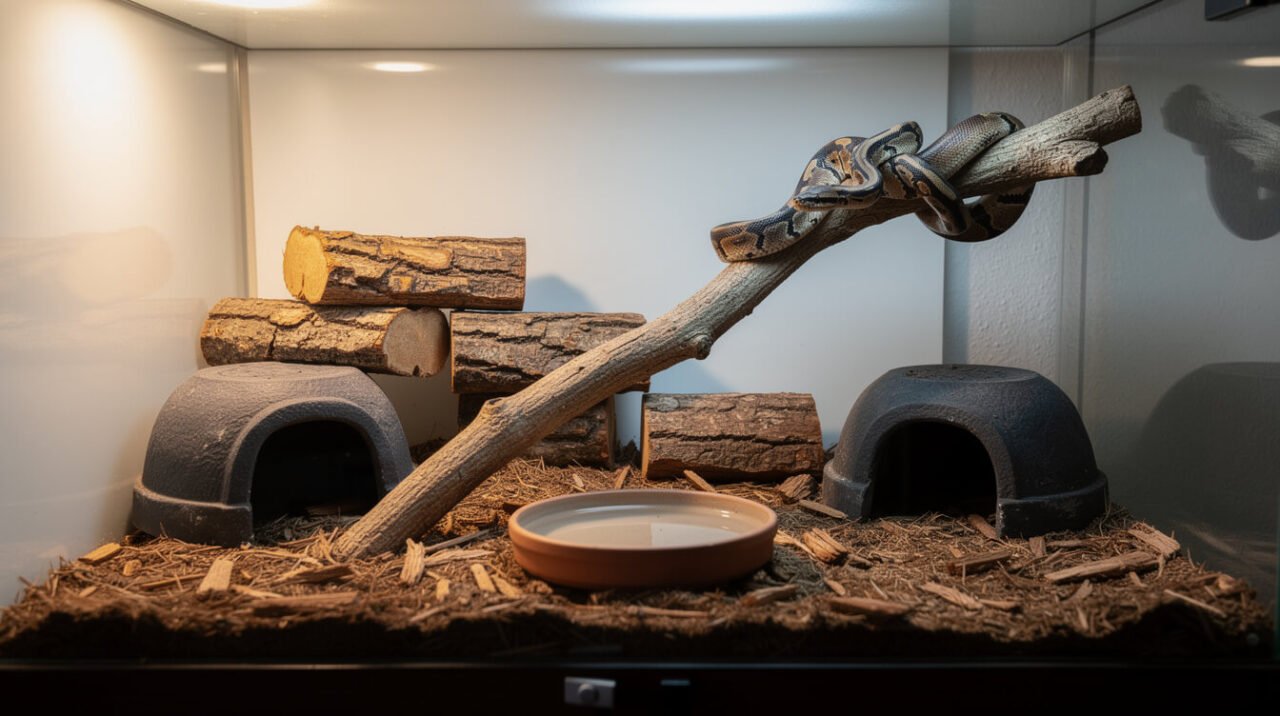
Temperature. PetMD gives a warm end of 95°F and a cool end around 78°F. The Reptile Rescue Center asks for ambient air around 80°F with a warm-side surface temperature of 90 to 92°F. Big Apple Herp specifies a warm hide or basking area of 88 to 92°F, a cool side of 75 to 80°F, and a general ambient range of roughly 77 to 86°F. These are not the same measurement — basking surface, ambient air, and warm-end air are three different readings, part of why the figures look further apart than they are.
The overlap all three would sign off on: a warm end in the high 80s to low 90s°F, a cool end in the mid-to-high 70s°F, and a real gradient between them so the snake can choose. Inside that range, with a snake that is feeding, shedding cleanly, and holding weight, you are fine. Outside it, move toward the middle rather than chase one source’s exact figure.
Two non-negotiables both the Merck Veterinary Manual and the Reptile Rescue Center insist on: every heat source runs through a thermostat, and no hot rocks. Merck notes hot rocks “frequently result in burns” and says heaters should be thermostat-controlled, screened from the animal, and positioned toward one end to create the gradient.
Humidity. PetMD: 40 to 60%, raised to around 70% during a shed cycle. Reptile Rescue Center: 50 to 60%. Big Apple Herp: generally 50 to 70%, with temporary increases while shedding. The common ground is roughly 50 to 60% day to day, higher through a shed — and all three agree you should be reading a hygrometer rather than guessing. Chronic low humidity shows up as stuck shed and retained eye caps; chronic high humidity with poor ventilation shows up as skin and respiratory problems.
Feeding and handling. The Reptile Rescue Center’s care sheet puts adults at a meal every 7 to 10 days, pre-killed or frozen-thawed, and asks you not to handle the snake for 48 to 72 hours afterward so it can digest undisturbed. PetMD notes ball pythons are nocturnal, so evening feeding works better, and that they are solitary — housing two together “can encourage stress, aggression, and competition.”
Two hides, not one. Give identical snug hides at the warm and cool ends. A snake forced to choose between the temperature it needs and the security it needs will pick security and sit at the wrong temperature — straight back to problem number one. For how these systems interlock, our complete reptile care guide covers the same logic across species, and the bearded dragon care guide makes a useful contrast: different animal, same principle that the gradient is the whole game.
Signs of decline, and when to call a reptile vet
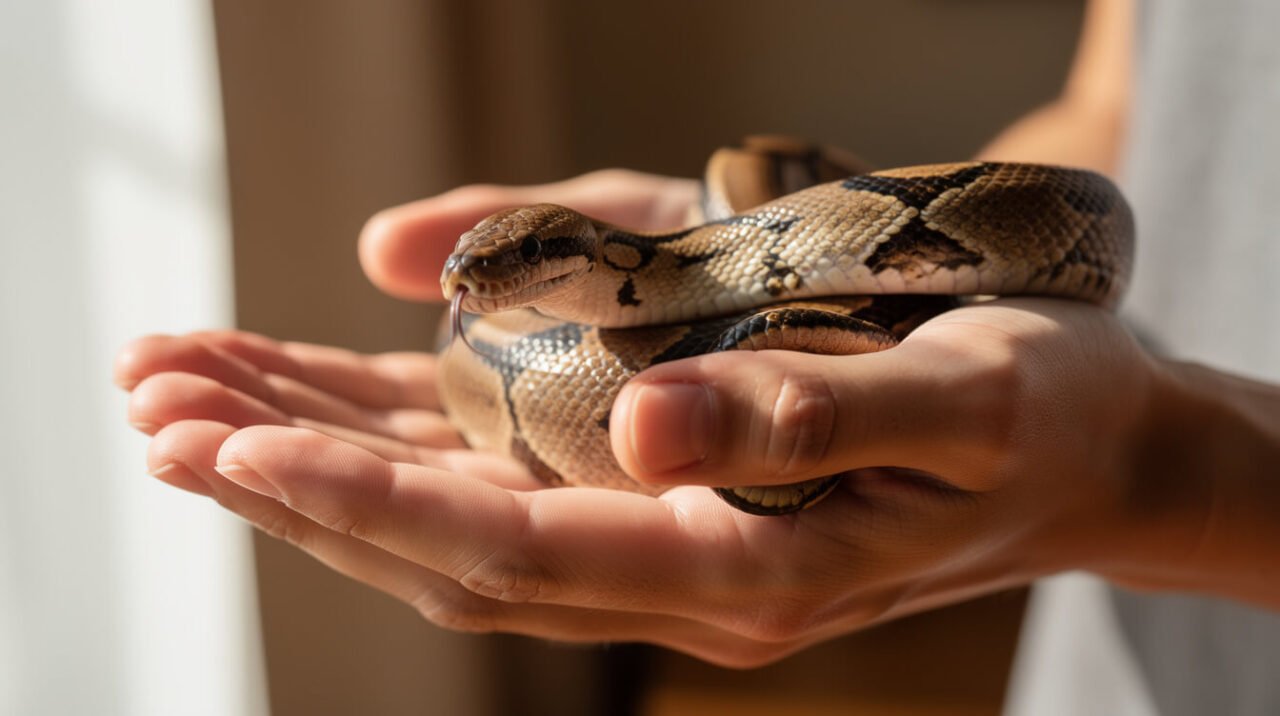
“What are the signs that a ball python is dying?” is one of the most-asked and least-answered questions around this topic. Here is the answer, with a firm boundary: this is recognition, not diagnosis. We inform husbandry; your veterinarian treats animals.
Call a reptile-experienced vet promptly if you see:
- Open-mouth breathing, audible breathing, or mucus and bubbles around the mouth or nostrils. A ball python at rest breathes silently and with its mouth closed.
- Lethargy with loss of grip strength — a snake that hangs limp instead of gripping your hand has changed in a way that matters.
- Reddened or discolored belly scales. VCA’s veterinary authors list this alongside lethargy, loss of appetite, and open-mouth breathing as signs of septicemia, and note that septicemic snakes “are critically ill and are often near death.”
- A sour smell, or hemorrhage, thick mucus, or cheesy pus in the mouth — the picture VCA describes for infectious stomatitis, mouth rot.
- Prolonged refusal to feed with weight or muscle loss, particularly a spine that is becoming prominent. Ball pythons are famous for seasonal fasts, and a well-conditioned adult skipping meals in winter is usually fine. A fast with visible condition loss is not the same thing.
- Stuck shed, retained eye caps, or blistered skin on the underside.
And the unglamorous habit that beats all of this: book the annual exam PetMD recommends, and find your reptile vet before you need one at 9pm on a Sunday. Keep a travel bin and the clinic’s after-hours number where you will find them in a hurry. Still deciding whether a snake fits your life? Start with our honest rundown of the best reptiles for beginners.
Thirty years is the real commitment: cost, morphs, and planning ahead
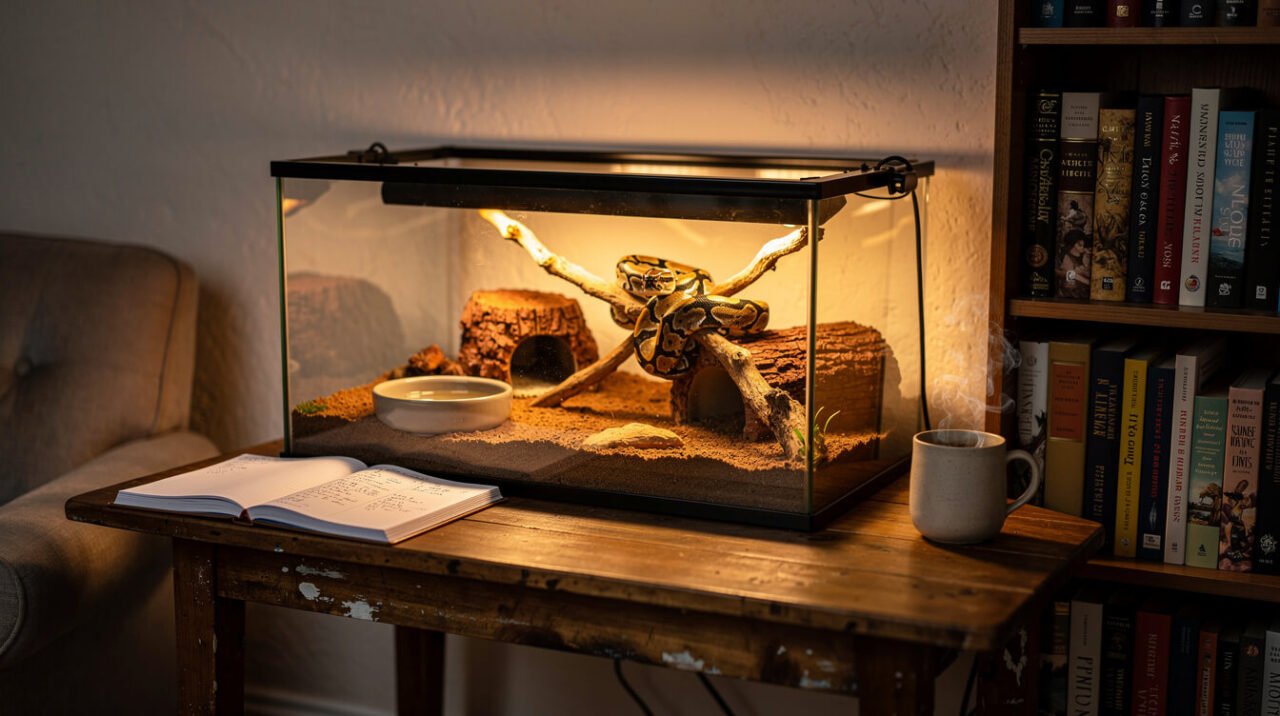
Here is the part the sales pages leave out.
The purchase price is the smallest number involved. PetMD puts a normal ball python at around $20, with morphs in the hundreds and rare combinations in the thousands. Then the real budget starts. The Merck Veterinary Manual: “substantial investment is required for an appropriate enclosure, which must be considered as part of the overall pet budget.” Add thirty years of frozen rodents, electricity, replacement bulbs, failed thermostats, substrate, one or two enclosure upgrades, and annual vet exams.
Name the person who takes the snake. A ball python bought by an eighteen-year-old may still be alive when that person is approaching fifty, through moves, jobs, and the chapters nobody plans for. Write down who would take it, and tell them. Reptile rescues exist precisely because so few people do this, and adult, normal-patterned snakes are the hardest animals in rescue to place.
Morphs: the honest version. Breeder pages tend to wave this away; the peer-reviewed literature does not. A 2014 paper in the Journal of Exotic Pet Medicine used a survey of expert opinion to describe “wobble syndrome,” a heritable neurological disorder associated with the widely bred “spider” morph, and assessed its welfare implications. That establishes a welfare concern, not a lifespan effect — we have seen no evidence the spider gene shortens life and will not imply one. The takeaway is about who you buy from: a breeder who names a line’s known issues before the sale beats a cheaper snake from one who mentions them after.
Thirty years in, most keepers we know have stopped being sheepish about it and started wearing the obsession on purpose. Our shop is small and unapologetically reptile-biased — right now it is a single design, the Bearded Dragon Crown Sunglasses King T-Shirt, and a fair number of snake people wear it anyway.
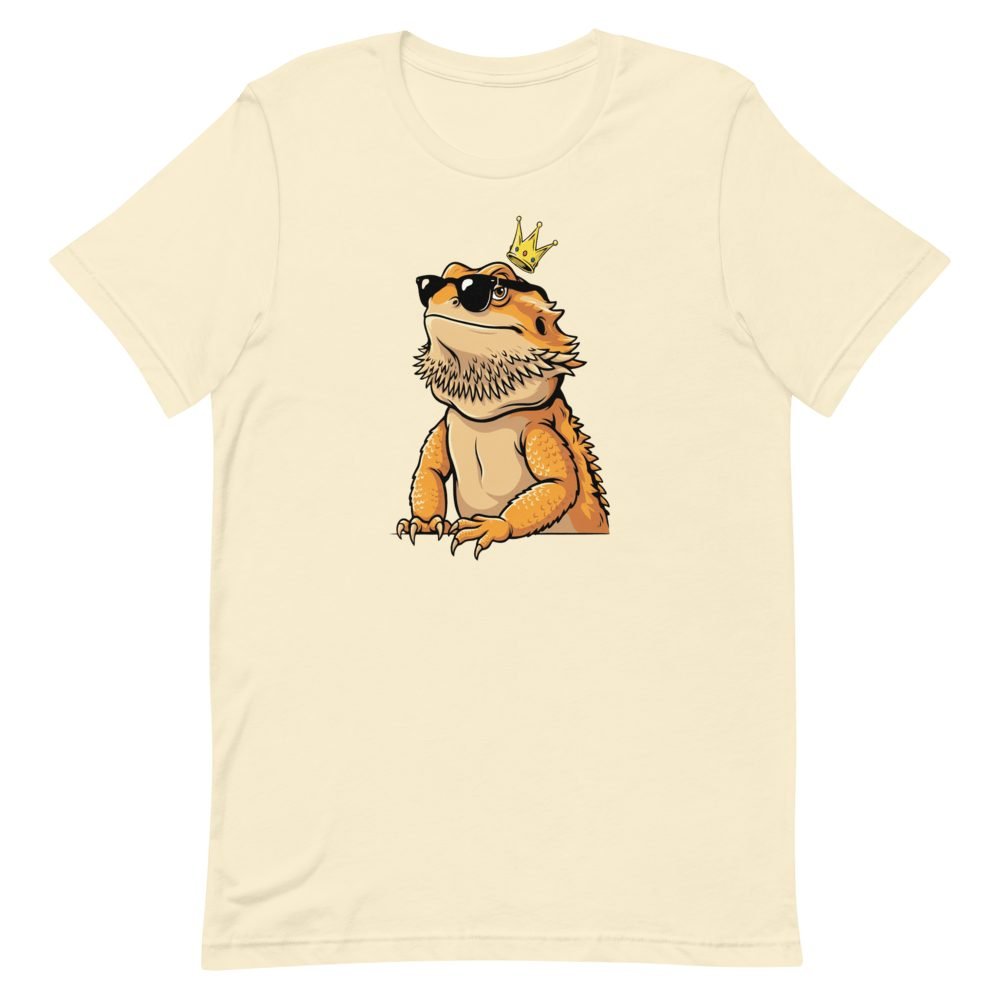
Wear the obsession
The Bearded Dragon Crown Sunglasses King T-Shirt — one design, printed for people who talk about thermal gradients at parties. Reptile-keeper humor, worn unapologetically.
None of this is meant to talk you out of a ball python. They are genuinely one of the better first snakes — calm, manageably sized at three to five feet, forgiving of a keeper still learning. A thirty-year animal just deserves a thirty-year decision, made with the real numbers in front of you.
This long-horizon thinking runs through the whole lifespan cluster here: leopard gecko lifespan, how long axolotls live, how long pet frogs live, and how long a toad lives.
How long do ball pythons live? Common questions, answered
How long do ball pythons live as pets?
Commonly 20 to 30 years with good care, with 30 to 40 reported for exceptionally well-kept animals. Plan for three decades.
What is the oldest ball python ever recorded?
A female at the Saint Louis Zoo, estimated at 62 years old when she laid eggs in 2020. Before her, the oldest documented ball python was a male at the Philadelphia Zoo who died at 47.
How long do ball pythons live in the wild?
Usually quoted as 10 to 15 years, but that figure is an estimate rather than a measured result — wild snake longevity data is genuinely scarce.
Do morphs live shorter lives?
There is no good evidence that most morphs affect lifespan. Some combinations carry documented welfare problems, the spider morph’s wobble syndrome being the best known, which is a separate issue from how long the animal lives.
Can I tell how old my ball python is?
Not reliably, if you did not get it as a hatchling. Size tracks feeding history as much as age, and there is no simple test — the Saint Louis Zoo’s own record-holder is dated from an estimate made in 1961.
What are the signs a ball python is dying?
Open-mouth or audible breathing, mucus around the mouth, deep lethargy with loss of grip strength, reddened belly scales, and weight loss with a prominent spine all warrant a prompt reptile-vet visit. Please do not try to treat a declining snake from an article — including this one.
Final thoughts
The reason the published answers disagree is not that nobody knows how long ball pythons live. It is that the number depends almost entirely on the keeper. Genetics sets a ceiling somewhere north of forty years; thermostats, hygrometers, frozen-thawed prey, and an annual vet visit decide how close any individual animal gets to it.
Which is hopeful, really. The boring parts — the daily temperature check, the clean water bowl, the hide at both ends — are not chores at the edge of the hobby. They are the hobby. Get them right for thirty years and you may end up with an animal that has been in your life longer than almost anything else in your house.
First ball python? You are already doing the most important thing: reading up before it matters.
Before you go
Keep learning your animal
We publish a new guide every day. The best of them land in one short weekly email, so you never miss the one about your species.

Dr. Zoe Santos is a distinguished herpetologist and a revered expert in the care, conservation, and study of reptiles and amphibians. With a PhD in herpetology and over 18 years of field and academic experience, Zoe brings a depth of knowledge to her readers that is both rare and invaluable.