Can Dogs Eat Pumpkin? How Much, Which Kind, and What Pumpkin Can’t Actually Fix
Can dogs eat pumpkin? Yes. Plain cooked pumpkin and canned 100% pumpkin are safe for most dogs. Pumpkin is low in calories, most dogs love it, and a spoonful on dinner is one of the easiest treats you can give. Two things matter more than “yes,” though, and most guides get both of them fuzzy. First, the portion advice published online ranges about twelve-fold for the same dog. Second, the “high fiber” pitch that sells pumpkin as a stomach fix is much smaller than it sounds.
Below: the safe kinds, what pumpkin really does, how much to give, and the pie-season risks ranked by how much they matter. If your dog has diarrhea right now, skip to the section on when pumpkin is fine and when it’s a vet call.
Can dogs eat pumpkin? The short answer
Yes, dogs can eat pumpkin, as long as it’s the right kind. Here’s the quick version.
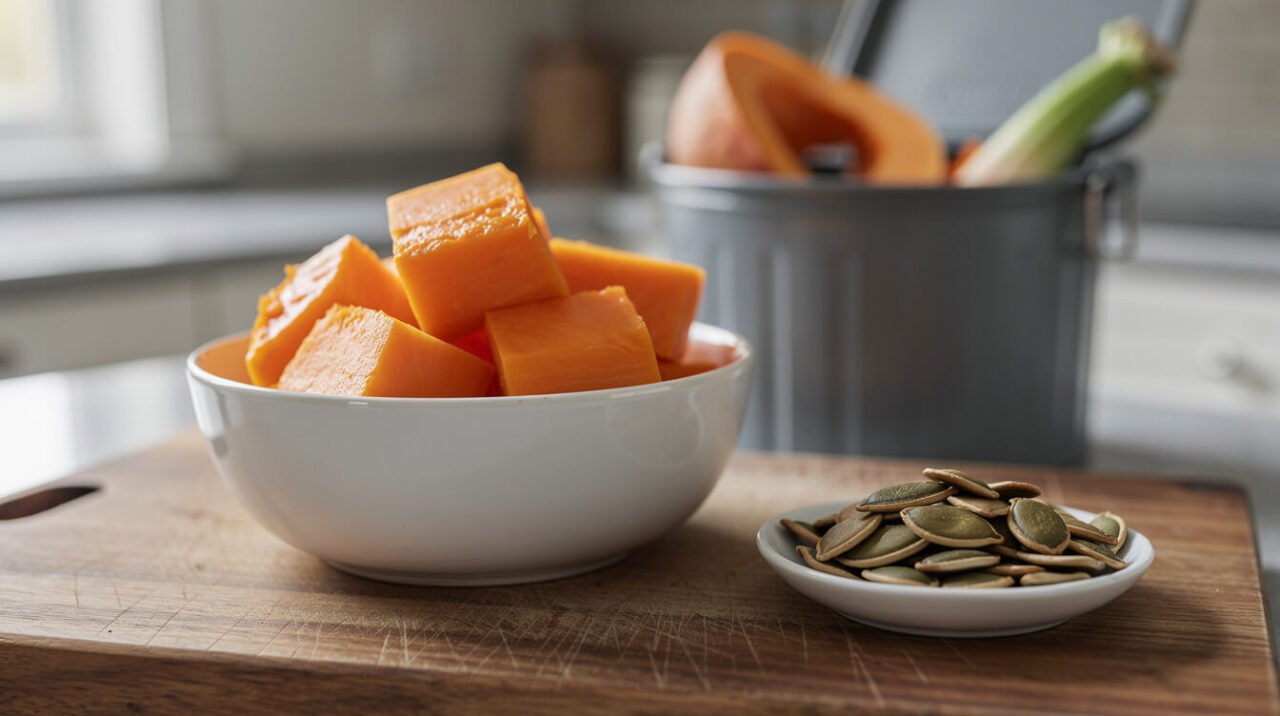
- Safe: canned pumpkin whose label lists one ingredient, pumpkin. Also safe: fresh pumpkin you’ve peeled, seeded, and cooked plain (baked, steamed, or boiled) until soft.
- Fine with care: plain roasted pumpkin seeds, ground or chopped, in small amounts.
- Not a good idea: raw pumpkin chunks, the rind, and the stem. Raw pumpkin isn’t toxic, but it’s hard to digest, and the tough parts are a choking or blockage risk.
- No: pumpkin pie, pie filling, pumpkin bread, pumpkin spice drinks, and anything sweetened or spiced. Most of these are a stomach-upset problem. Sugar-free versions can be an emergency (more on xylitol below).
- No: the jack-o’-lantern that’s been sitting on the porch. Once a carved pumpkin starts to rot, it’s moldy food waste.
The most useful habit is reading the can. “100% pure pumpkin” and “pumpkin pie mix” sit side by side in near-identical cans, and pie mix is the sweetened, spiced one. And if your dog is on a prescription diet or has a diagnosed condition, ask your veterinarian before adding anything, pumpkin included.
Is pumpkin good for dogs? What it really does
Pumpkin is a genuinely nice food for dogs: mostly water, low in calories, rich in beta-carotene, and almost sodium-free in its plain canned form. Most of the internet goes further and sells it as “high in fiber,” a fix for both diarrhea and constipation. That’s where the honest answer gets smaller.
The fiber, measured
Board-certified veterinary nutritionists at Tufts University’s Cummings School have done the math. In a fiber comparison table, Dr. Cailin Heinze lists canned pumpkin at 5 calories and 0.4 grams of total fiber per tablespoon. Psyllium husk, the fiber supplement vets often use, carries 3.5 grams per tablespoon, almost nine times as much. The USDA’s figures for canned pumpkin agree: about 83 calories and 7 grams of fiber per cup.
Dr. Lisa Freeman, also a board-certified nutritionist at Tufts, put it more bluntly in “The Problem with Pumpkin.” She writes that matching the fiber in one popular high-fiber therapeutic diet would take “nearly 12 cups/day to a medium-sized dog.” The typical spoonful owners give, she notes, runs from a quarter teaspoon to two tablespoons.
So pumpkin can nudge a soft stool in the right direction, but it’s a mild food effect, not a fiber treatment. When fiber really matters, vets reach for other tools, and that’s what the research uses:
- In a 2000 Journal of Veterinary Internal Medicine review of 37 dogs with chronic large-bowel diarrhea, Dr. Michael Leib reported a very good to excellent response in most dogs on a highly digestible diet plus a psyllium supplement. The median starting amount was 2 tablespoons a day, and the median dog weighed about 31 pounds.
- A 2021 study of 22 police working dogs with chronic large-bowel diarrhea added 4 tablespoons of psyllium husk a day for a month. Response was rated good or very good in 90% of the dogs.
- A 2026 Ohio State study in JAVMA raised dietary fiber in 32 dogs with chronic enteropathy. Fecal scores improved in 28 of them.
Our own arithmetic (not a study): using Tufts’ psyllium figure, the Leib median works out to roughly 7 grams of fiber a day. Matching that with canned pumpkin would take about 17 tablespoons, more than a cup. No portion chart suggests anything close, and none should. This isn’t a cue to start psyllium at home, either. Those doses were vet-chosen for diagnosed dogs, and Tufts warns that some human fiber products contain xylitol.
Two smaller claims worth correcting
“Too much pumpkin causes vitamin A toxicity.” Pumpkin’s vitamin A comes as beta-carotene (the USDA lists zero preformed retinol), and the Merck Veterinary Manual states that “there are no known cases of intoxication with beta carotene.” Too much pumpkin is still a problem, but it’s a gut problem: gas, loose stool, and an unbalanced bowl.
“It’s the soluble fiber that does it.” In Tufts’ table only about 0.1 grams per tablespoon is soluble. Pumpkin is mostly insoluble and water-heavy, which is why it’s gentle and why its effect is modest.
How much pumpkin to give a dog (and why the numbers disagree)

Ask five sources how much pumpkin to give a 30-pound dog and you’ll get five answers. We lined up the published guidance from vet clinics and major pet sites for that one dog:
| Source | What it says | For a 30-lb dog, per day |
|---|---|---|
| Chewy (vet-written) | About 1 tsp per 10 lb | About 1 Tbsp |
| Ridgefield Veterinary Center | About 1 tsp per 10 lb per day | About 1 Tbsp |
| Longwood Veterinary Center | 21–50 lb: 1–2 Tbsp | 1–2 Tbsp |
| Drake Center (syndicated vet blog) | 1 tsp–1 Tbsp per 10–15 lb | 2 tsp–3 Tbsp |
| AKC, for diarrhea or constipation | 1–4 Tbsp per meal | 2–8 Tbsp (two meals) |
| Drake Center, for weight loss | ⅛–¼ cup per 10 lb, replacing part of the diet | 6–12 Tbsp |
That’s one tablespoon to twelve. Nobody is being careless. The sources are describing three different uses.
1. As a treat or topper (most dogs, most days)
Start with about 1 teaspoon per 10 pounds of body weight per day, the low end most sources share: about ½ teaspoon for a 5-pound dog, 1 tablespoon for a 30-pound dog, 2 tablespoons for a 60-pound dog. If the stool stays normal for a few days, that’s your amount. Watch the units: a tablespoon is three teaspoons, the most common mix-up on pumpkin charts.
2. As short-term stool support (with your vet’s okay)
The larger per-meal amounts, like AKC’s 1–4 tablespoons, are for a mild, short-lived bout of soft stool or constipation. That’s when a quick call to your vet’s office is worth it. They know your dog’s history and can say whether pumpkin is reasonable or the dog needs to be seen.
3. As a calorie swap for weight loss (vet-planned only)
The weight-loss figure is biggest because it replaces part of the regular food with something bulky and low-calorie. Done casually, that shortchanges protein and nutrients (Tufts also cautions that added fiber can reduce nutrient absorption), so plan it with your vet. Our guide to keeping your dog’s diet balanced covers the bigger picture.
The calorie math nobody does
The usual rule is that treats stay under 10% of daily calories. A typical 30-pound adult dog needs very roughly 700 to 900 calories a day (your food’s feeding guide and your vet have the real number for your dog). Ten percent is 70 to 90 calories, which is 14 to 18 tablespoons of canned pumpkin at 5 calories each.
So the 10% rule almost never limits pumpkin. Your dog’s gut reaches its limit long before the calories do, which is why “start small and watch the stool” is the real rule.
Can dogs eat raw pumpkin? Seeds, stems, and the porch jack-o’-lantern
Raw pumpkin
Raw pumpkin flesh isn’t toxic, and a dog who steals a sliver while you carve will almost always be fine. It’s just harder to digest and more likely to upset the stomach. For fresh pumpkin, peel it, scoop out the seeds and strings, cook the flesh soft, and serve it plain and cooled. One surprise from USDA data: home-cooked pumpkin is far more watery than canned, with about 49 calories and 2.7 grams of fiber per cup against canned’s 83 and 7.
Rind and stem
Skip both. Either can choke a dog or lodge in the gut, especially in gulpers. If your dog swallows a large piece and then vomits repeatedly, stops eating, or seems painful, call your vet.
Pumpkin seeds
Plain seeds roasted without salt, oil, or seasoning are fine in small amounts, ground or chopped onto food. Whole seeds can choke small dogs. As for pumpkin seeds as a natural dewormer, the Drake Center’s veterinarian doesn’t recommend it, writing that the large volumes needed “can create irritation and constipation.” Worries about worms call for a fecal test and a proper dewormer.
The jack-o’-lantern on the porch
A carved pumpkin left outside softens and grows mold within days. The Merck Veterinary Manual describes how Penicillium molds growing on food waste and compost can produce tremorgenic mycotoxins, toxins that cause vomiting, tremors, wobbliness, and seizures in dogs, sometimes within one to two hours of eating. Merck lists dairy, nuts, pasta, and compost as the typical sources rather than pumpkins specifically. But a rotting jack-o’-lantern is moldy food waste, and it’s sitting at dog height.
Carved pumpkins may also hold candle wax or paint. When the jack-o’-lantern starts to slump, put it in a lidded bin, not the open compost pile. If your dog eats moldy pumpkin and starts trembling or acting off, call your vet right away rather than waiting to see.
The weekly care guide
Get it right for your animal, every week
One email a week: new care guides, species deep-dives, and the safety answers keepers search for, written by our specialists. No spam. Unsubscribe anytime.
Pumpkin pie, spices, and add-ins: the risks ranked
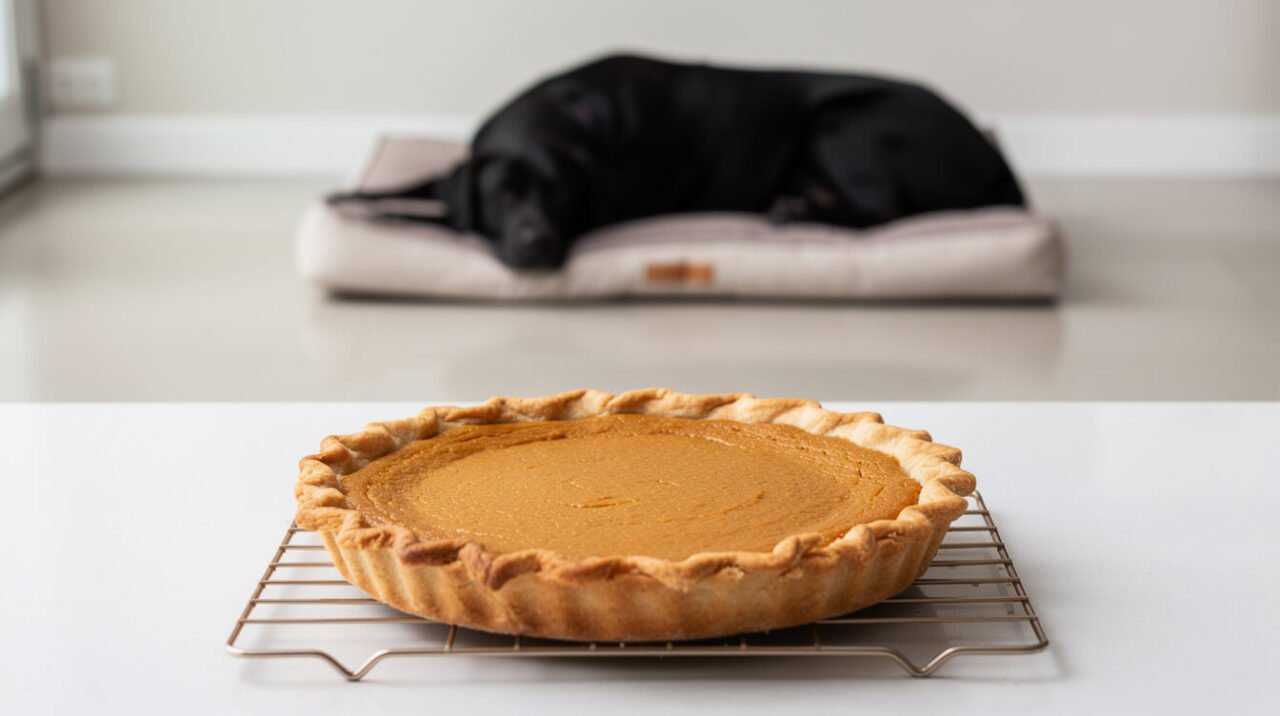
Most guides lump sugar, nutmeg, cloves, and xylitol into one scary list. They aren’t equally dangerous. Here they are in order of how much they matter.
1. Xylitol: the real emergency
Xylitol is a sugar substitute that’s dangerous to dogs. The FDA explains that it can cause a rapid, severe drop in blood sugar within 10 to 60 minutes. Signs include vomiting, weakness, staggering, collapse, and seizures. The ASPCA adds that liver damage can follow within 12 to 24 hours. Xylitol may appear on labels as birch sugar or wood sugar, and the FDA names sugar-free baked goods, pies included, as places it turns up.
To be clear, a standard canned pie mix isn’t usually where xylitol hides. We checked one widely sold brand (Libby’s Easy Pumpkin Pie Mix). Its label lists pumpkin, water, sugar, salt, spices, dextrose, and natural flavors, with no xylitol. The risk lives in sugar-free, keto, and “diabetic-friendly” pumpkin desserts, sugar-free whipped toppings, and home bakes made with a sugar substitute. If you don’t know what sweetened it, assume it might be xylitol.
If your dog ate something that might contain xylitol, call now. Don’t wait for symptoms. Call your veterinarian or an emergency clinic, or one of these poison lines:
- ASPCA Animal Poison Control Center: (888) 426-4435 (a consultation fee may apply)
- Pet Poison Helpline: (855) 764-7661 ($99 per incident fee)
2. Fat and sugar: the common problem
The pie itself, with its butter crust, whipped cream, and sugar, is the far more common issue. For most dogs a stolen slice means an upset stomach, but for some it’s worse. The Merck Veterinary Manual notes that “dietary indiscretion is believed to be a common risk factor” for pancreatitis in dogs. Vomiting, a painful belly, or a dog who won’t eat after a rich holiday food is a reason to call your vet that day.
Pie mix also changes the math. Tufts notes that canned pumpkin pie mix runs up to 281 calories per cup, compared with 83 for plain pumpkin.
3. Nutmeg and cinnamon: dose matters
Nutmeg contains myristicin, so it’s often listed as “toxic to dogs,” but dose matters. A staff veterinarian at Pet Poison Helpline writes that recipe amounts are “very unlikely to cause serious toxicity,” though mild stomach upset can happen. Real poisoning (disorientation, a racing heart, possibly seizures) takes a very large amount. Cinnamon is similar, a problem as a pile of powder or an essential oil, not a dusting in a pie. A lick of pie isn’t a spice emergency. A dog in the spice jar is a call to your vet.
4. Salt: matters for some dogs
Plain canned pumpkin has about 12 milligrams of sodium per cup, but Tufts found salted brands with nearly 600. That’s minor for a healthy dog getting a tablespoon, but for a dog with heart or kidney disease, buy the no-salt-added can.
The add-ins nobody checks
Dog pumpkin recipes often add other ingredients, and that’s where problems slip in:
- Peanut butter: the FDA lists “some peanut and nut butters” among xylitol products. Read the label for xylitol and birch sugar every time you buy a new jar.
- Broth: many store-bought broths contain onion or garlic. The ASPCA notes that these Allium vegetables can damage red blood cells in dogs. Use plain water or a broth made for dogs.
- Yogurt: plain and unsweetened only. Some dogs don’t handle dairy well, so keep it small.
Pumpkin for dog diarrhea or constipation: when it’s fine and when it’s a vet visit
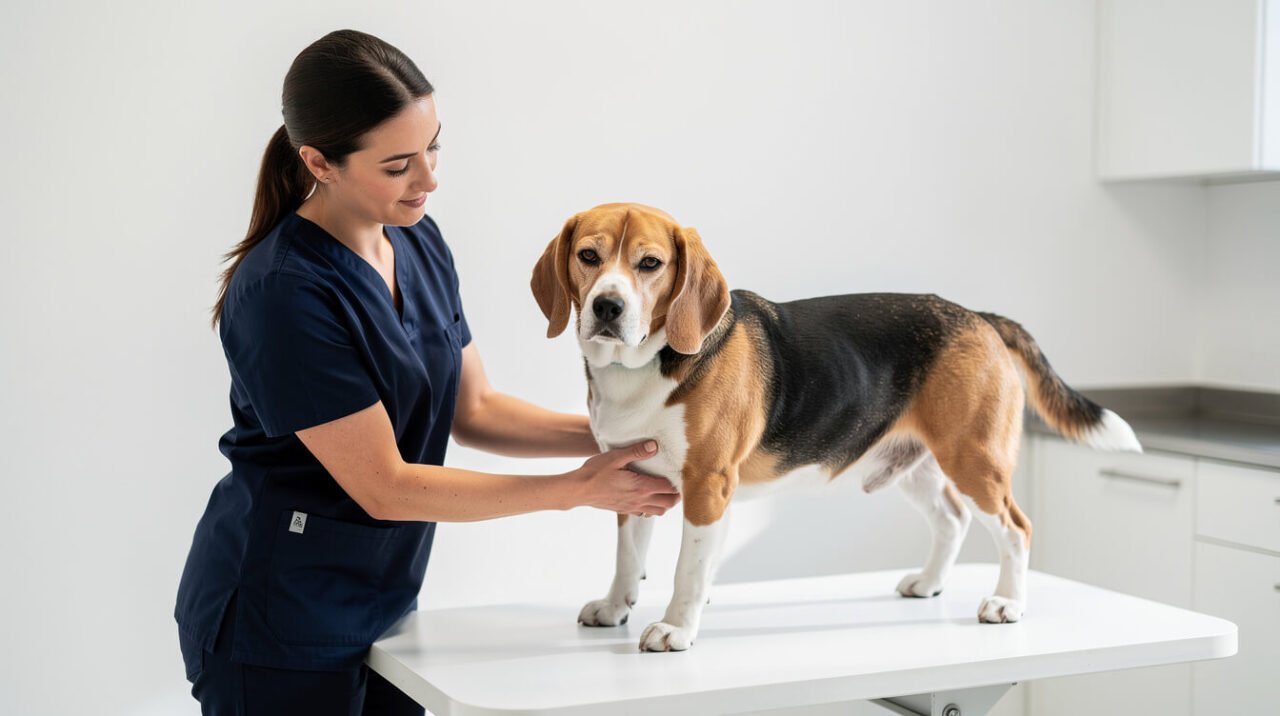
Here’s where pumpkin advice can go wrong: the spoonful can delay a vet visit the dog actually needs. Pumpkin is reasonable for a mild, short-lived problem in a bright, otherwise healthy adult dog, like a soft stool or two after a food change, in a dog who’s still eating, drinking, and acting normally.
Call your vet instead of reaching for pumpkin if:
- It’s a puppy. The AKC notes that puppy diarrhea “should always be treated as a potential emergency.” Young puppies dehydrate quickly, and serious infections like parvovirus start this way.
- It’s lasting. Longwood Veterinary Center advises contacting your vet if symptoms last more than 48 hours, or if you see blood in the stool, lethargy, or signs of dehydration. Chewy’s vet-written guide is more cautious still: call if symptoms are severe or haven’t cleared after a day.
- There’s vomiting too, or your dog won’t eat, seems painful, or has a swollen belly. Ridgefield Veterinary Center lists a severely swollen abdomen with repeated attempts to vomit among the signs that need emergency care right away.
- Your dog is straining to poop. Straining can look like constipation but come from something else: a blockage, an enlarged prostate, or even diarrhea that makes a dog feel the urge. The AKC urges owners to find out why a dog is constipated before treating it.
- Your dog has a health condition, takes medication, or eats a prescription diet.
- It keeps coming back. Recurring soft stool is worth a workup. As the research above shows, chronic bowel problems respond to a vet-chosen diet and the right fiber, not to more pumpkin.
If pumpkin is reasonable
Use plain canned pumpkin at the low end of the portions above, with fresh water always available. If things aren’t clearly better within a day or two, call your vet. A bigger spoonful isn’t the next step.
Easy ways to serve pumpkin to your dog
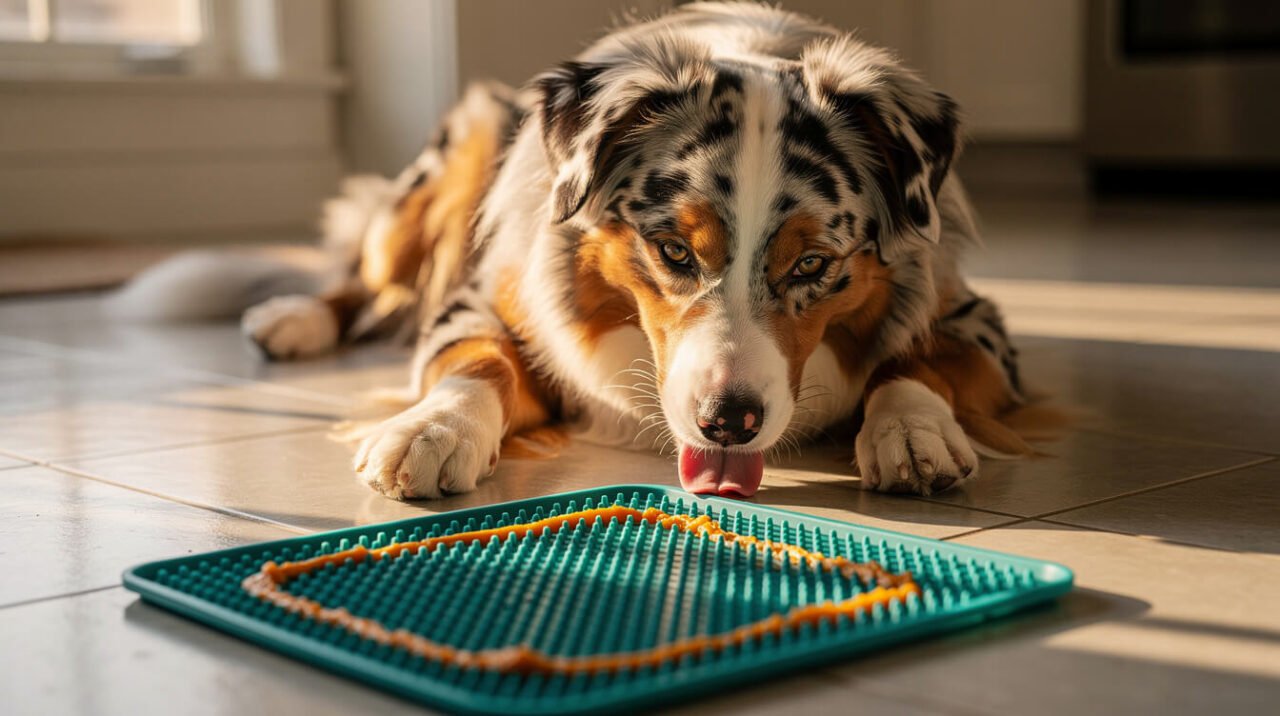
Now the fun part. Pumpkin is so low in calories that it makes great enrichment.
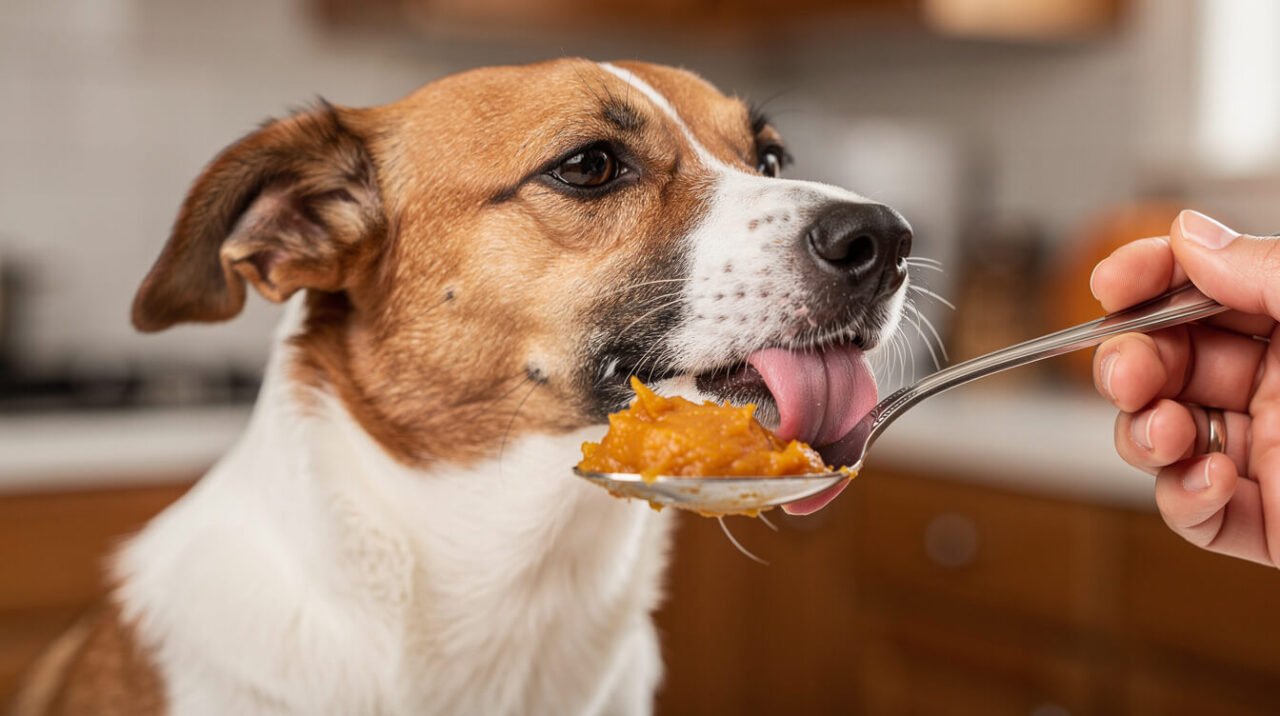
- Off the spoon: a teaspoon or two as a training reward or a “good dog” moment.
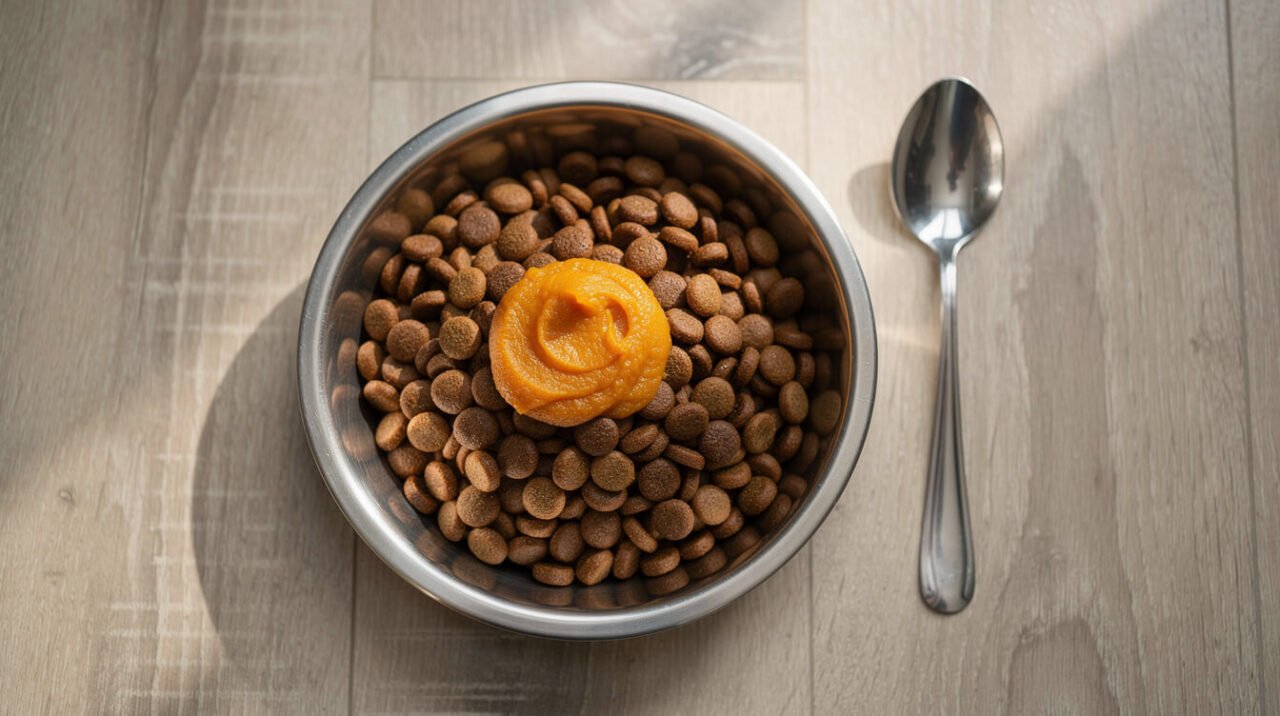
- As a topper: stir your dog’s portion into their regular food. It’s a nice trick for a dog who’s lukewarm about dinner.
- On a lick mat: spread a thin layer into the grooves. Licking is calming for many dogs, and a thin smear goes a long way. Freeze the mat for a longer session.
- In a stuffed toy: fill a rubber treat toy with pumpkin, or pumpkin mixed with a little plain unsweetened yogurt, and freeze it. It’s perfect for a rainy afternoon or while you’re on a work call.
- Frozen bites: spoon pumpkin into an ice cube tray, one teaspoon or tablespoon per cube to match your dog’s portion, and freeze. It’s portion control that’s already done.
Refrigerate an opened can in a covered container and use it within a few days, then freeze the rest. If you’re the kind of keeper who has a dog on the couch and a bearded dragon basking across the room, our Bearded Dragon Crown Sunglasses King T-Shirt is a small nod to the scaly side of the family. The GeoZoo shop is small and reptile-first for now.

For homes with more than one kind of animal
Dog on the couch, bearded dragon under the basking lamp? The Bearded Dragon Crown Sunglasses King T-Shirt is a soft, everyday tee for keepers who are a little obsessed, in the best way.
Making your own pumpkin puree
Halve a small sugar or pie pumpkin, scoop out the seeds and strings, and bake it cut side down until a fork slides through. Scoop the flesh from the skin, mash it, and cool it completely, adding nothing. Carving pumpkins work too, just stringier. Homemade puree is lighter than canned, so expect a smaller effect on stool.
Can dogs eat pumpkin every day? Frequently asked questions

Can dogs eat pumpkin every day?
Yes, a treat-sized amount of plain pumpkin can be daily for most healthy dogs, as long as it stays a small extra on a complete diet. If your dog seems to need it daily to keep stools normal, mention that to your vet.
Can puppies eat pumpkin?
A healthy puppy can have a small taste of plain pumpkin. Use the teaspoon end of the portions, and keep their growth diet doing the real work. Don’t use pumpkin to treat puppy diarrhea. Puppies with diarrhea should see a vet.
Is sweet potato or pumpkin better for dogs?
Both are safe cooked and plain. Pumpkin is the lighter option: USDA data puts canned pumpkin at about 34 calories per 100 grams, while baked sweet potato is around 90. Sweet potato has its own handling rules, which we cover in our guide to raw sweet potato for dogs.
Does pumpkin help with anal glands?
Firmer stool can help some dogs’ glands empty, but a spoonful of pumpkin adds very little fiber. If your dog is scooting, licking their rear, or smells fishy, see your vet. Impacted or infected glands need hands-on care, and your vet can say whether a higher-fiber diet makes sense.
Can dogs eat pumpkin bread, muffins, or a pumpkin spice latte?
No. Baked goods bring sugar, fat, spice, and sometimes xylitol, and a coffee-shop latte adds caffeine, which the ASPCA lists among foods to keep from pets. Give your dog their own version: plain pumpkin on a lick mat.
What other vegetables can my dog eat?
Plenty, each with its own catch. We’ve covered celery (cut small, because the strings are the risk), spinach, raw versus cooked, and quinoa (rinse off the saponins). For fall movie nights, here’s the popcorn answer.
Final thoughts: a good treat, not a cure
So, can dogs eat pumpkin? Absolutely. Choose the can whose only ingredient is pumpkin, start with about a teaspoon per 10 pounds, and watch how your dog does. Skip the rind and stem, bin the slumping jack-o’-lantern, keep pie and anything sugar-free out of reach, and save the poison line numbers in your phone before the holidays.
Pumpkin is a treat, not a treatment. When a dog has a real digestive problem, the next step is your veterinarian, not a bigger spoonful. You’re reading this because you want to get it right, and that’s the part that matters most.
Before you go
Keep learning your animal
We publish a new guide every day. The best of them land in one short weekly email, so you never miss the one about your species.

Meet Jake Harrington, your go-to guru for all things canine. With over 15 years of professional dog training experience, Jake has transformed the lives of thousands of dogs and their owners. His journey began in the bustling streets of a major city, where he discovered his natural affinity for understanding canine behaviors and communication.