Can My Dog Eat Avocado? A Vet-Informed Safety Guide
Short answer: no — avocado isn’t a food to intentionally give your dog, and skipping it is the safer, simpler choice. A dog that steals a lick of plain avocado flesh off a cutting board is unlikely to be in serious trouble, but the pit, skin, and leaves are genuinely dangerous, and even the flesh carries risks that make “just a little” harder to judge than it looks. Here’s what’s actually going on with can my dog eat avocado, and what to do if yours already got into one.
This is one of the most-searched dog food safety questions for a good reason: avocado is a kitchen staple, it’s genuinely healthy for people, and the internet’s answers about it are all over the map — some sites call it perfectly fine in small amounts, others call it outright toxic. Both of those framings are oversimplified. The real picture has more nuance than a single yes-or-no headline, and that nuance is exactly what matters for keeping your dog safe.
Can my dog eat avocado? The quick answer
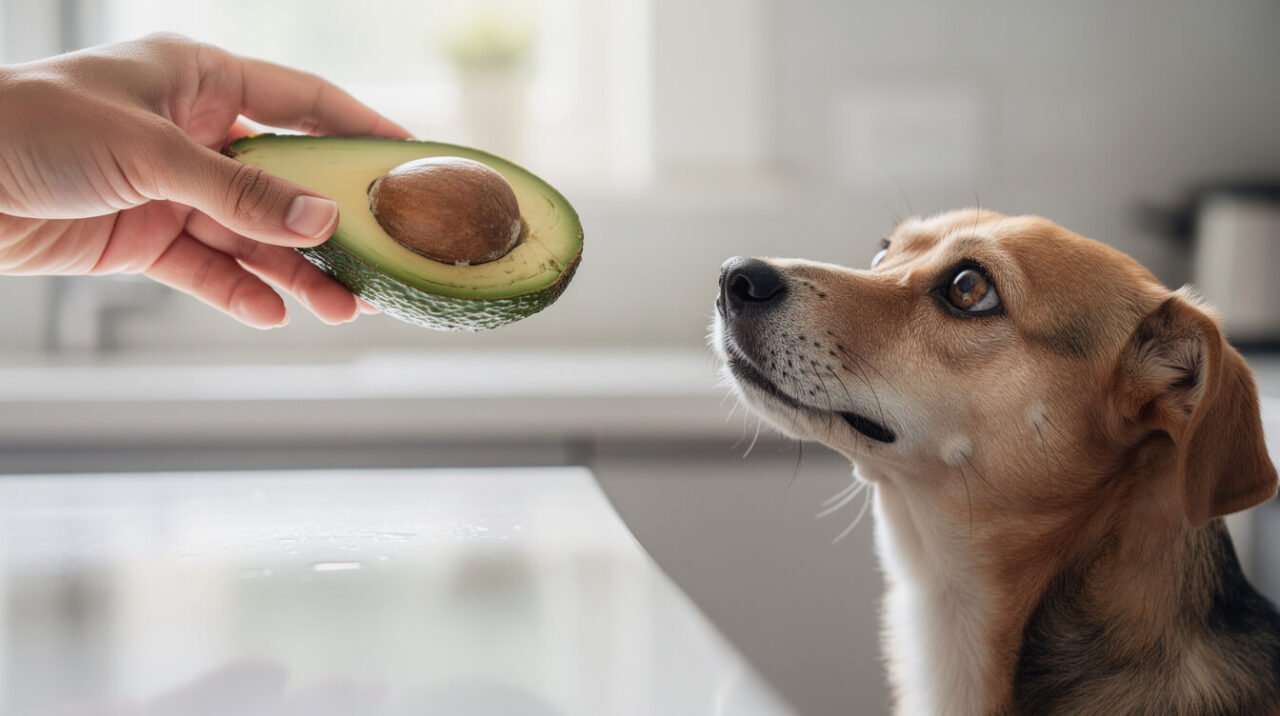
Avocado sits in an awkward middle ground in the world of dog nutrition, and that’s exactly why the question comes up so often. Unlike grapes or chocolate, where the answer is a flat no, avocado’s risk depends heavily on which part your dog ate, how much, and what else was mixed in with it.
Here’s the practical version:
- Plain avocado flesh, a small accidental taste: most healthy adult dogs tolerate this without serious incident, though mild stomach upset is possible.
- Avocado pit, skin, or leaves: a real hazard — both from higher concentrations of a toxin called persin and from physical choking/blockage risk.
- Guacamole, avocado toast, or chip dip: often more dangerous than the avocado itself, because of onion, garlic, and salt mixed in.
- Large amounts of flesh, regularly, or in a small/at-risk dog: a real path to an upset stomach or worse — this is not a “safe snack to add to the bowl” food.
We’ll say this plainly because it matters for a welfare-first answer: veterinary sources don’t fully agree on how much avocado flesh a dog can safely handle, and we’re not going to hand you a precise number that pretends more certainty exists than it does. The honest, caring recommendation is to treat avocado as a “keep it away from your dog” food, not a “safe in moderation” one — and to call your veterinarian if you’re ever unsure what your dog actually ate.
Why is avocado risky for dogs? Persin, explained
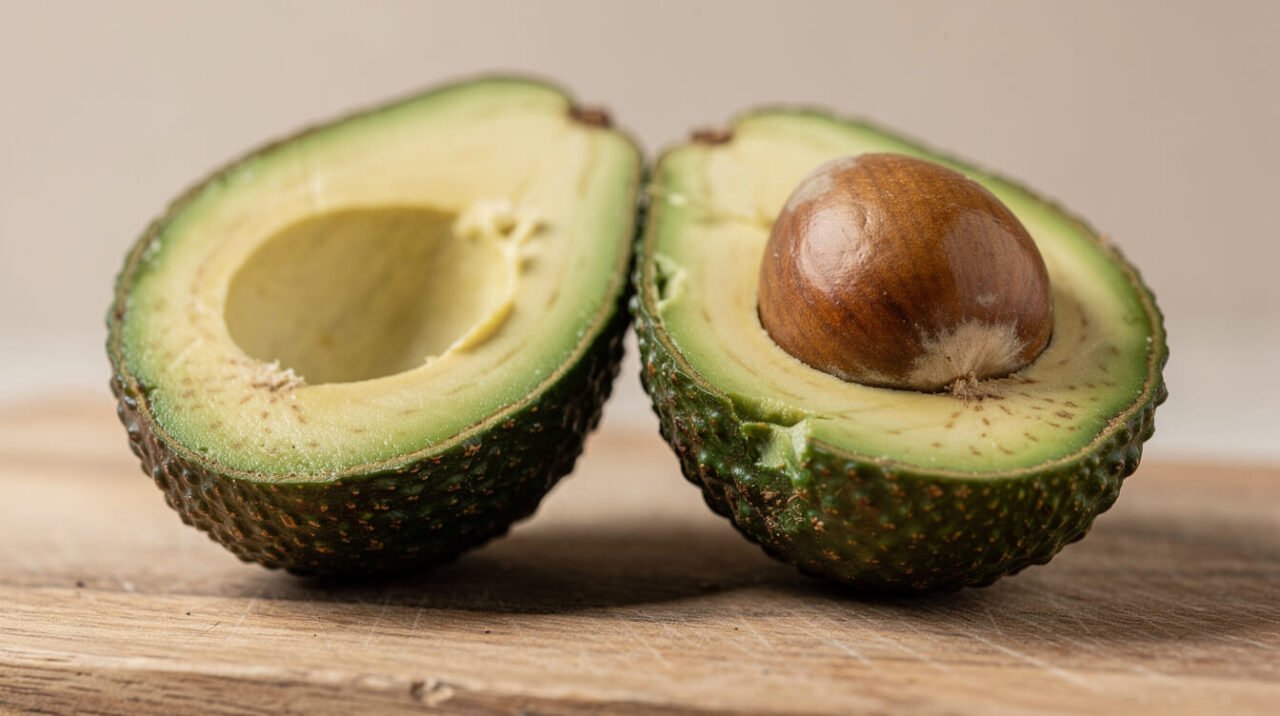
The reason avocado comes up in “toxic to dogs” conversations at all is a naturally occurring compound called persin. Persin is a fungicidal toxin the avocado plant produces to defend itself, and it’s found throughout the plant — in the leaves, bark, skin, and, at lower concentration, the fruit’s flesh.
Some animals are highly sensitive to persin. Birds, horses, rabbits, and some other species can become seriously ill or die from relatively small exposures — which is one reason avocado has such a fearsome reputation across the pet world generally. Dogs are considerably more resistant to persin than those species, and most veterinary toxicology sources agree that dogs are unlikely to develop true persin poisoning from a small taste of plain flesh.
That doesn’t mean “no risk.” Persin can still irritate a dog’s digestive tract even at lower doses, and the concentration climbs sharply as you move from flesh to skin to leaves to pit. In sensitive individuals, or with large exposures, reported effects have included vomiting, diarrhea, and in rare, high-exposure cases, cardiac muscle damage and fluid buildup around the heart or lungs. That last outcome is uncommon in dogs specifically, but it’s serious enough that “rare” isn’t the same as “impossible,” and it’s exactly the kind of specific number and outcome we won’t casually reassure you away from — if you have any doubt about what or how much your dog ate, your veterinarian is the right call, not a search engine.
If you keep other animals too — birds especially — treat avocado as a hard no in any space they can access. The persin risk profile for birds is much more severe than for dogs, and a multi-pet household is exactly the situation where “the dog will probably be fine” isn’t the whole safety question.
It’s also worth understanding why you’ll see conflicting advice online. Some sources emphasize that dogs are comparatively persin-resistant and describe small amounts of plain flesh as low-risk. Others emphasize that persin is present in the flesh too, just at a lower dose, and recommend avoiding avocado altogether. Both statements are true — they’re just answering slightly different questions (“what’s the worst-case toxicology” versus “what’s a practical, cautious household rule”). GeoZoo’s answer leans toward the cautious rule, because the downside of skipping avocado is nothing, and the downside of guessing wrong is a vet visit.
The pit, skin, and leaves: where the real danger lives
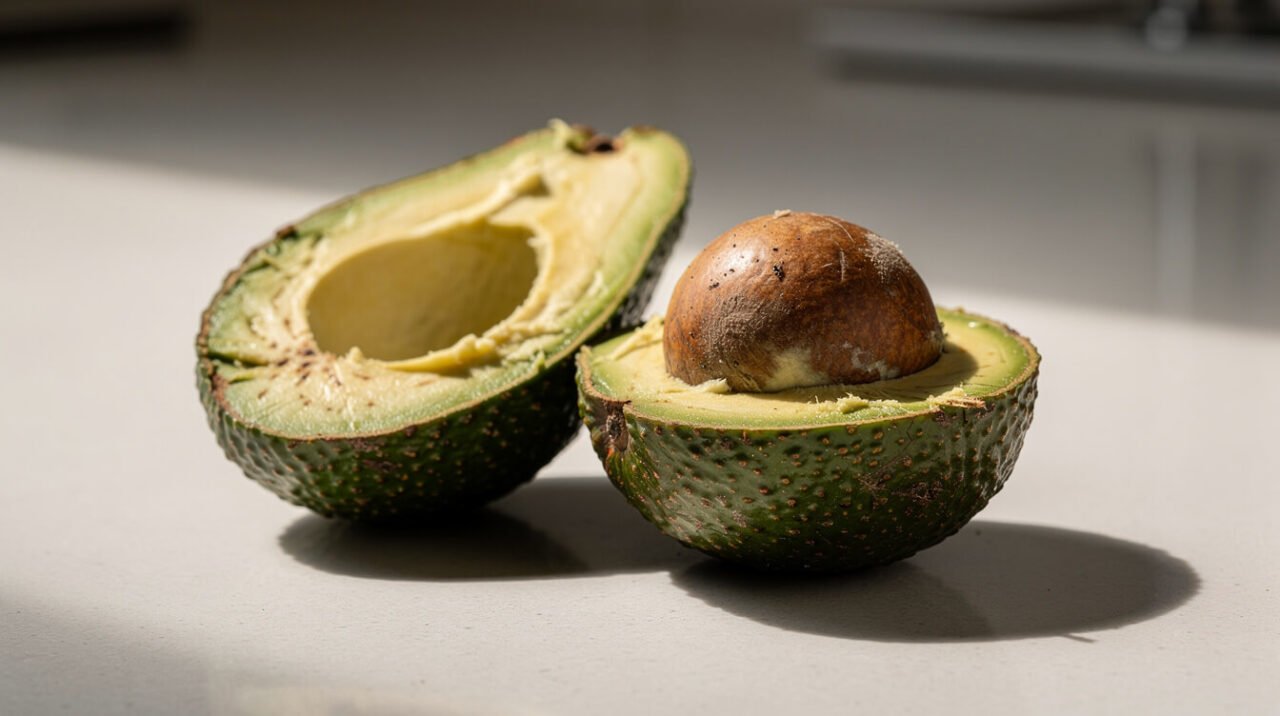
If your dog got into a whole avocado rather than a spoonful of guacamole, the parts matter enormously:
The pit (seed)
The pit is the single biggest concern with avocado, and it’s a mechanical danger as much as a toxin one. It’s roughly golf-ball-sized in many varieties, hard, and round — a genuinely dangerous shape for a dog to swallow. It can lodge in the esophagus, cause choking, or pass into the stomach or intestines and create a blockage that requires emergency surgery to remove. This risk exists regardless of your dog’s size, though it’s more acute in small and medium breeds.
Skin and leaves
These carry meaningfully higher persin concentrations than the flesh. They’re also simply not something a dog’s digestive system is built to process, and they add to general GI irritation risk on top of any persin exposure.
The flesh
The lowest-risk part, comparatively — but “lowest risk” is not the same as “risk-free,” especially in volume. Fat content (more on that below) is arguably the bigger practical concern with the flesh specifically.
If you’re currently unsure which part your dog swallowed, or how much, that uncertainty itself is a reason to call your vet rather than guess. Trying to reconstruct “was it just a bite of flesh or did the pit go missing too” after the fact is exactly the kind of judgment call worth a professional’s input.
A few habits that make this a non-issue in the first place:
- Cut and pit avocados over the sink or trash, not on an open counter your dog can reach mid-prep.
- Bag or bin the pit and skin immediately — don’t leave them in an open kitchen trash can a determined nose can get into.
- If you grow avocado trees or have one in the yard, keep dogs from access to fallen fruit and leaf litter underneath.
- Treat “counter-surfing” prevention as part of avocado safety, the same way you would with chocolate or grapes — the safest amount is zero exposure, not damage control after the fact.
Guacamole, avocado toast, and other real-world exposure risks
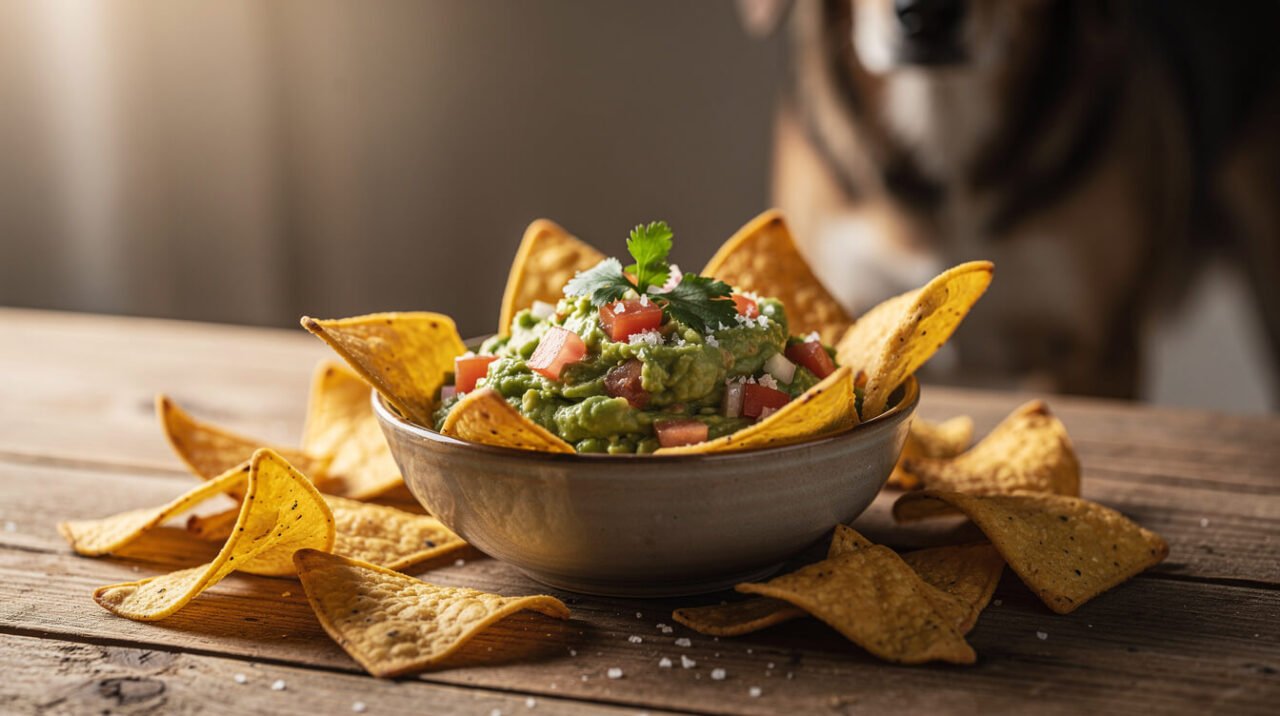
In practice, dogs rarely eat a plain, unadorned avocado. They get into guacamole at a party, lick a plate of avocado toast, or snag a fallen piece of taco. This matters because the other ingredients are often the bigger threat:
- Onion and garlic (common in guacamole) — genuinely toxic to dogs, capable of causing red blood cell damage with enough exposure.
- Salt — in large quantities, a risk on its own, and guacamole and chips both tend to be salty.
- Lime or lemon juice — generally low risk in small amounts, but citrus oils can cause GI upset.
- Spicy seasonings — no toxicity concern typically, but a fast track to an unhappy stomach.
The practical takeaway: if your dog ate guacamole, don’t just mentally file it as “ate some avocado.” Check what else was in the bowl, because the onion and garlic content may be the more urgent question for your veterinarian than the avocado itself.
This exposure pattern is also very seasonal. Party spreads around football watch days, Cinco de Mayo, and summer cookouts are, in our experience, the single most common way dogs end up with avocado-related stomach upset — not a deliberate feeding, but an unattended bowl at dog-nose height for the length of a game. If you’re hosting, treat the guac bowl the same way you’d treat a bowl of grapes or a plate of onions: high enough to be out of reach, and never “just for a minute” on a coffee table.
Avocado oil is a slightly different case — it doesn’t carry meaningful persin, and small incidental amounts (a dog licking a spill) aren’t typically a concern. But it’s still pure fat, so the pancreatitis risk below still applies if a dog gets into a real quantity of it.
Fat content and pancreatitis: the risk beyond persin

Even setting persin aside entirely, avocado is a genuinely high-fat food, and that alone is a reason to keep it out of your dog’s regular diet. Dogs that eat a large amount of any high-fat food — bacon grease, buttery leftovers, or avocado — are at risk of pancreatitis, an inflammation of the pancreas that ranges from mild discomfort to a serious, sometimes life-threatening illness requiring hospitalization.
This risk isn’t unique to avocado, but it’s an important reason we won’t wave off “a whole avocado” as harmless just because a dog is resistant to persin. Dogs that are already prone to pancreatitis — including many small breeds, dogs with a history of it, and dogs carrying extra weight — are at meaningfully higher risk from a single high-fat binge, avocado included.
Certain breeds show up more often in pancreatitis discussions with veterinarians — Miniature Schnauzers in particular are frequently noted as predisposed, along with some other small and toy breeds. That’s a reason for extra caution in those dogs specifically, not a signal that other breeds get a free pass on high-fat foods.
Watch for these signs of pancreatitis in the 24–72 hours after a high-fat food exposure:
- Repeated vomiting
- A hunched posture or visible abdominal pain
- Loss of appetite
- Lethargy beyond normal tiredness
- Diarrhea, sometimes with a greasy appearance
Any combination of these after your dog got into avocado (or any fatty food) is worth a same-day call to your vet, not a wait-and-see.
My dog just ate avocado — what should I do right now?

If it just happened, work through this in order:
- Remove any remaining avocado — including the pit, skin, and any dish it was in — so your dog can’t get a second helping.
- Figure out what was actually eaten. Plain flesh only? The pit? Guacamole with onion and garlic in it? This changes what your vet needs to know and how urgent the call is.
- Estimate the amount as best you can, along with your dog’s approximate weight. “A spoonful” on a 70-pound dog is a very different conversation than half an avocado on a 10-pound dog.
- Call your veterinarian or an animal poison control line if you have any of the following: the pit is missing and unaccounted for, your dog ate skin or leaves, the dish contained onion/garlic, your dog is small, a puppy, senior, or has a health condition, or your dog is already showing any symptoms.
- Don’t induce vomiting on your own — that decision (and whether it’s even appropriate) belongs to a veterinary professional who knows the full picture, not a home remedy.
Keep the ASPCA Animal Poison Control Center number handy for situations like this: (888) 426-4435 (a consultation fee may apply). If your regular vet’s office is closed, this is exactly what animal poison control and emergency vet clinics exist for.
Signs that mean “go now,” not “watch and wait”: repeated vomiting, straining to vomit with nothing coming up, visible abdominal pain or bloating, labored breathing, lethargy that seems out of character, or any sign your dog may have swallowed the pit whole (gagging, difficulty swallowing, retching).
Frequently asked questions

Is avocado toxic to all dogs the same way?
No. Persin sensitivity and pancreatitis risk both vary by individual dog, and smaller dogs face a proportionally larger exposure from the same amount of avocado than a large breed would. Dogs with a history of pancreatitis, certain endocrine conditions, or existing GI sensitivity are at higher risk from any exposure.
What about avocado in commercial dog food?
Some commercial dog foods list avocado meal or avocado oil as an ingredient in carefully controlled, formulated amounts. That’s a different situation from a dog eating raw avocado at home — the formulation and quantity are managed by the manufacturer. If you’re curious about a specific product, that’s a good question for your vet or the manufacturer directly, not something to extrapolate from this article.
My dog eats avocado all the time and has been fine — does that mean it’s safe?
Tolerance without incident doesn’t mean zero risk, and pancreatitis in particular can develop after repeated exposures, not just a single large one. We’d still recommend phasing it out rather than treating “no problems so far” as a green light — this is one of those cases where the caring move is to remove the variable rather than wait to see if it eventually causes a problem.
Are Hass avocados different from other varieties?
Persin concentration does appear to vary somewhat by avocado variety, but this isn’t precise enough science to build a safety rule around, and we’re not going to pretend otherwise. Treat all avocado varieties the same way: keep them away from your dog, regardless of which one is in your kitchen.
Can puppies eat avocado?
Puppies deserve extra caution across the board — smaller body size means a proportionally larger exposure from the same amount of food, and a developing digestive system is generally more sensitive to both fat and GI irritants. Keep avocado away from puppies at least as strictly as you would from adult dogs, and call your vet promptly if a puppy gets into any.
My dog only licked a plate that had guacamole on it — is that an emergency?
Usually not, for a healthy adult dog with no other risk factors — but “usually not” isn’t the same as “definitely fine,” especially if the guacamole was heavy on onion or garlic. Watch for vomiting, diarrhea, or lethargy over the next 24–48 hours, and don’t hesitate to call your vet if anything seems off or if your dog is small, young, senior, or already has a health condition.
What fruits are actually safe to share with my dog?
Plenty of fruits are a much easier “yes” than avocado — small amounts of plain watermelon or blueberries, for example, are popular vet-approved treats for most healthy dogs. See our guides on whether dogs can eat watermelon and whether dogs can eat blueberries for the safer, lower-effort options.
Final thoughts
Avocado isn’t in the same danger tier as chocolate or grapes, and a single accidental lick of plain flesh usually isn’t an emergency for a healthy adult dog. But between the pit’s choking and blockage risk, the higher-persin skin and leaves, the fat content that can trigger pancreatitis, and the fact that avocado so often shows up mixed with onion and garlic in guacamole, this isn’t a food worth building into your dog’s routine. The genuinely caring move is the simple one: keep avocados out of paw’s reach, and if your dog does get into one, work through the checklist above and lean on your veterinarian for anything you’re not sure about.
Curious what else might be sitting in your kitchen that’s worth a second look? Our guide to whether dogs can have olive oil covers another common high-fat kitchen staple, and our can dogs eat eggplant guide walks through a similarly nuanced “it depends on the part” question.

Meet Jake Harrington, your go-to guru for all things canine. With over 15 years of professional dog training experience, Jake has transformed the lives of thousands of dogs and their owners. His journey began in the bustling streets of a major city, where he discovered his natural affinity for understanding canine behaviors and communication.